20 A Schottky for a 15 V rail — the thermal budget is the real constraint
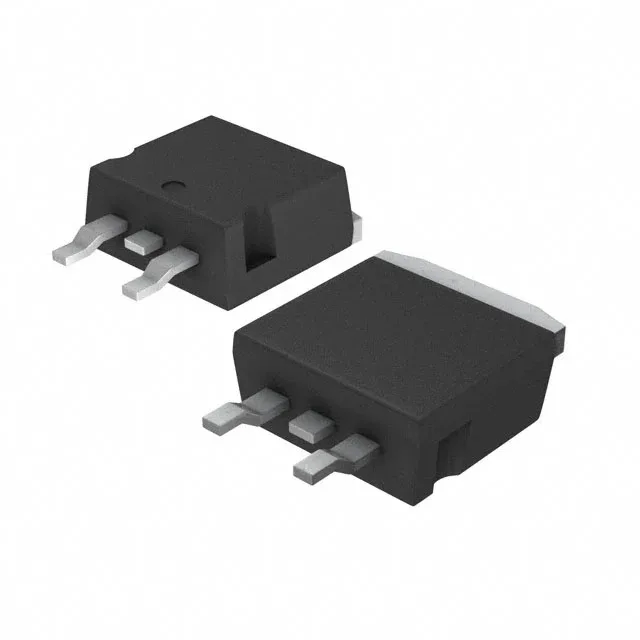
The STPS20L15G is a 20 A, 15 V Schottky rectifier from STMicroelectronics in a D2PAK (TO-263) surface-mount package. Its 410 mV typical forward drop at 19 A keeps conduction losses low, but the 15 V reverse voltage ceiling means this part is strictly for low-voltage rails — a 12 V output, an OR-ing diode on a 5 V bus, or the secondary side of a 15 V-or-less flyback converter. The 20 A average rating is the headline number, but the real design constraint is the junction temperature: 125 °C max, and at 20 A the copper area on the PCB tab pad sets the thermal resistance, not the package itself.
Obsolete — the sourcing path changes
If your design can tolerate a footprint change, a same-function Schottky in D2PAK with a higher reverse voltage (e.g. 30 V or 45 V) is worth evaluating for new production.
Fast recovery spec — what it means for switching
The STPS20L15G is classified as a fast recovery diode with recovery time ≤ 500 ns at forward current > 200 mA. For a Schottky, that recovery time is a category label rather than a limit — Schottky diodes are majority-carrier devices with essentially no stored charge, so switching losses are negligible up to several hundred kHz. The 500 ns bound covers the datasheet test condition; in practice the part switches cleanly into the low-MHz range in a 15 V, 20 A forward converter or OR-ing application.
Reverse leakage at temperature — the hidden derating factor
At 25 °C the reverse leakage is 6 mA at 15 V, which is typical for a 20 A Schottky. What the single-point number does not show is the exponential rise with junction temperature — at 100 °C the leakage can multiply by 5–10×, eating into the thermal budget. If the diode runs near its 125 °C max junction, the leakage power alone (Vr × Ir) can add several watts of dissipation. Keep the junction below 100 °C in continuous operation, or budget extra copper area on the D2PAK tab to keep the temperature rise in check.