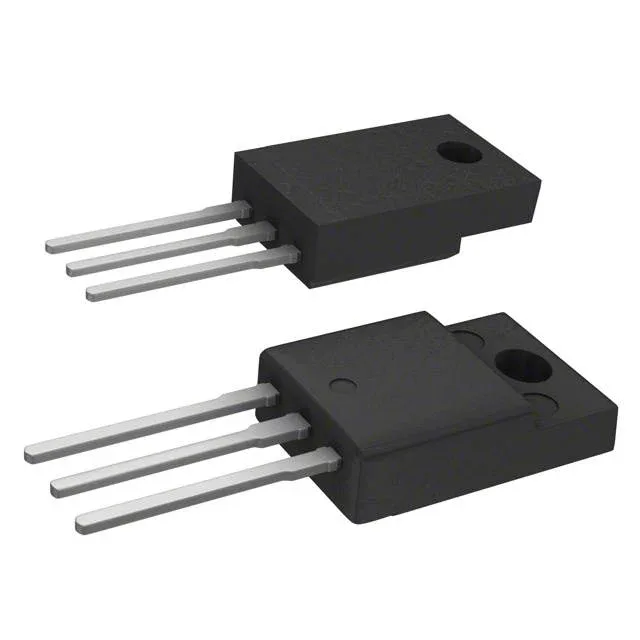
STMicroelectronics STP9NK50ZFP — Discrete Semiconductors

STP9NK50ZFP N-Channel MOSFET, 500 V, 7.2 A, TO-220FP

MPNSTP9NK50ZFP
Active

STMicroelectronics STP9NK50ZFP, SuperMESH™ N-channel MOSFET, 500 V drain-source, 7.2 A continuous drain, 850 mOhm Rds(on), 32 nC gate charge, TO-220FP through-hole package.

$2.0300Ref. price · indicative, final on quote
PackagingTO-220-3 Full Pack
RoHSROHS3 Compliant
SeriesSuperMESH™
Independent supplier — new & surplus stockAuthenticity-screened · ESD-safe packingListing updated Aug 2026

Specifications

STP9NK50ZFP specifications
ParameterValue
SeriesSuperMESH™
FET typeN-Channel
MountingThrough Hole
Drain to source voltage500 V
Drive voltage (Max rds on, min rds on)10V
Current - continuous drain (Id) @ 25°C7.2A (Tc)
Power dissipation30W (Tc)
Operating temperature-55°C~150°C(TJ)
PackageTube
Vgs±30V
TechnologyMOSFET (Metal Oxide)
CaseTO-220-3 Full Pack
Vgs(th) (Max) @ id4.5V @ 100µA
Rds on (Max) @ id, vgs850mOhm @ 3.6A, 10V
Gate charge (Qg) (Max) @ vgs32 nC @ 10 V
Input capacitance (Ciss) (Max) @ vds910 pF @ 25 V

Product details

This voltage class targets offline flyback converters, PFC stages, and auxiliary power supplies where the primary switch sees rectified mains. Gate charge totals 32 nC at 10 V, which sets the driver current needed for the target switching frequency: a 32 nC gate switched at 100 kHz draws 3.2 mA average from the driver, well within the capability of most standard MOSFET gate-drive ICs.

Package and thermal: TO-220FP full-pack isolation

The supplier device code is TO-220FP.

ROHS3 compliant.

Frequently asked questions

What is the Rds(on) of STP9NK50ZFP?

This value is specified at 25 °C junction; actual Rds(on) increases with temperature per the normalised curve in the datasheet.

Is STP9NK50ZFP compatible with a standard TO-220 footprint?

The TO-220FP (full-pack) package has the same 2.54 mm pitch and 0.60 mm pin diameter as standard TO-220, but the body is wider and the tab is fully moulded. It fits the same hole pattern on the PCB but requires a different heatsink interface — no metal tab contact, so the heatsink mounts against the plastic face.