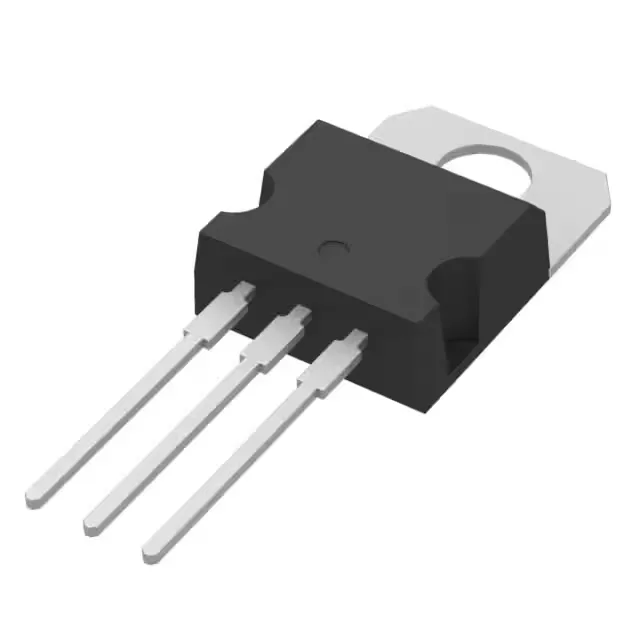
STMicroelectronics STP33N65M2 — Discrete Semiconductors

STP33N65M2 MOSFET N-Ch 650V 24A TO-220 – MDmesh M2

MPNSTP33N65M2
Active

STMicroelectronics MDmesh™ M2 series, STP33N65M2, N-Channel MOSFET, 650V Vdss, 24A Id, 140mOhm Rds(on), 41.5nC Qg, TO-220-3 through-hole package, 150°C junction temperature.

$3.9700Ref. price · indicative, final on quote
PackagingTO-220-3
RoHSROHS3 Compliant
SeriesMDmesh™ M2
Independent supplier — new & surplus stockAuthenticity-screened · ESD-safe packingListing updated Aug 2026

Specifications

STP33N65M2 specifications
ParameterValue
SeriesMDmesh™ M2
FET typeN-Channel
MountingThrough Hole
Drain to source voltage650 V
Drive voltage (Max rds on, min rds on)10V
Current - continuous drain (Id) @ 25°C24A (Tc)
Power dissipation190W (Tc)
Operating temperature150°C (TJ)
PackageTube
Vgs±25V
TechnologyMOSFET (Metal Oxide)
CaseTO-220-3
Vgs(th) (Max) @ id4V @ 250µA
Rds on (Max) @ id, vgs140mOhm @ 12A, 10V
Gate charge (Qg) (Max) @ vgs41.5 nC @ 10 V
Input capacitance (Ciss) (Max) @ vds1790 pF @ 100 V

Product details

650 V, 24 A, 140 mOhm — the switching-loss vs conduction-loss trade-off

The 41.5 nC total gate charge at 10 V means a 100 kHz switching frequency demands roughly 4.15 mA average from the gate driver, which a standard driver handles without issue.

Gate charge and input capacitance — driver loading

Thermal management and package

The TO-220-3 through-hole package allows a direct metal-tab connection to a heatsink.

The part is ROHS3 compliant. For dual-sourcing, a parametric search for 650 V, 24 A, N-channel TO-220 MOSFETs with similar Rds(on) and gate charge is the practical route.

Frequently asked questions

How does STP33N65M2 compare to STP33N65M5?

The STP33N65M5 is an earlier MDmesh generation with typically lower Rds(on) but higher gate charge. The M2 variant offers a balance of conduction and switching losses suited for hard-switching topologies like PFC and LLC converters. The M5 part may be preferred for very low-frequency switching where conduction loss dominates, while the M2 is better for higher-frequency designs where switching losses matter more.