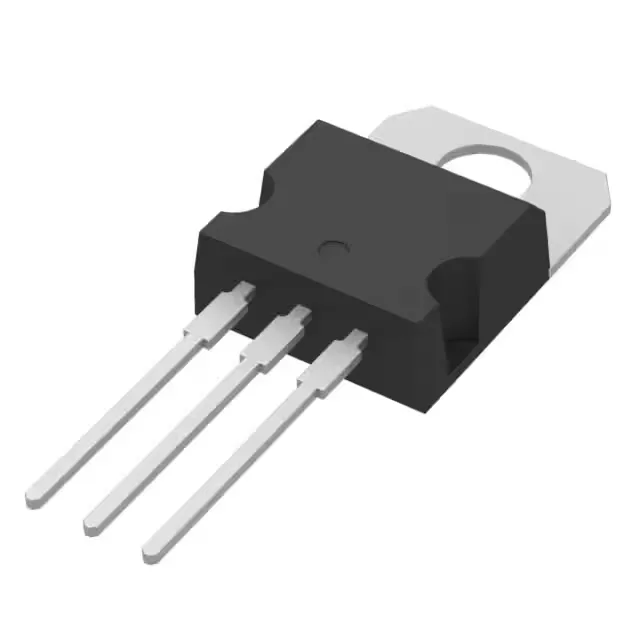
What this 300 V N-channel MOSFET does
It is designed for high-voltage switching applications where low conduction losses matter — think power supplies, inverters, and motor drives that run off a 300 V DC bus.
The on-resistance is specified at 90 mOhm maximum when the gate is driven to 10 V and the drain carries 15 A. That 90 mOhm figure is the conduction loss per ampere squared — at 15 A you are looking at roughly 20 W of dissipation just from Rds(on), which needs to be removed through the TO-220 package's tab. The gate-drive voltage is 10 V for the rated Rds(on); driving with a lower gate voltage will increase on-resistance significantly, so your gate driver must supply a clean 10 V rail. This number tells you how much energy the gate driver must push into the gate to switch the device on. In real-world conditions with a heatsink, you will derate this figure based on your thermal impedance.
The STP30NM30N comes in a TO-220-3 through-hole package. The metal tab is the drain connection, and the two inner pins are gate and source. The through-hole leads suit wave-soldering or hand-soldering into a PCB with 0.6 mm to 0.8 mm diameter plated holes.
Lifecycle status — obsolete, sourced to order
The STP30NM30N carries an official product status of Obsolete. STMicroelectronics has discontinued this MDmesh™ II part, meaning it is no longer manufactured in volume.