STMicroelectronics STP16CPC26XTR — Logic ICs

STMicroelectronics STP16CPC26XTR LED Driver, 16-Ch, 90mA

MPNSTP16CPC26XTR
End of Life

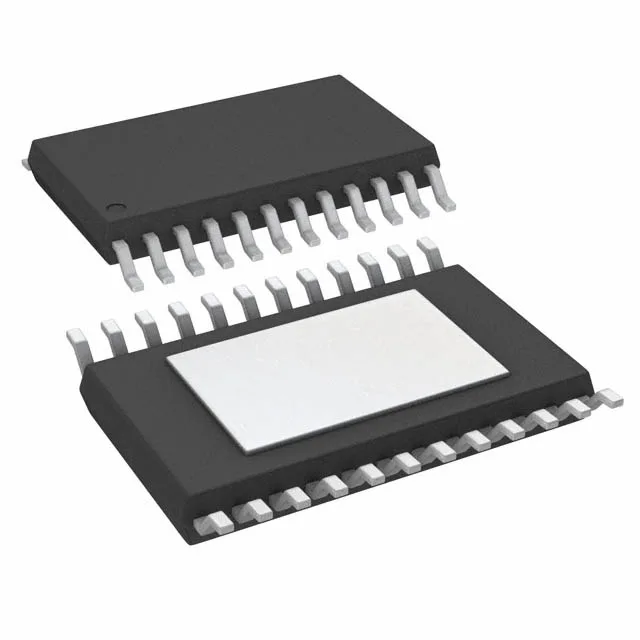
STMicroelectronics STP16CPC26XTR, Linear LED Driver, Analog Dimming, 16 Outputs, 90mA/Channel, 30MHz Shift Register, 3V to 5.5V Supply, -40 to 125°C, 24-TSSOP-EP.

$1.37Ref. price · indicative, final on quote
Packaging24-TSSOP (0.173", 4.40mm Width) Exposed Pad
RoHSROHS3 Compliant
Independent supplier — new & surplus stockAuthenticity-screened · ESD-safe packingListing updated Aug 2026

Specifications

STP16CPC26XTR specifications
ParameterValue
TypeLinear
MountingSurface Mount
Voltage - output20V
Voltage5.5V
Current - output (Channel)90mA
Frequency30MHz
I/O channels16
Operating temperature-40°C ~ 125°C (TA)
DimmingAnalog
PackageTape & Reel (TR); Cut Tape (CT)
TopologyShift Register
ApplicationsLighting
Case24-TSSOP (0.173\", 4.40mm Width) Exposed Pad
Internal switchYes

Product details

16-channel constant-current sink with a 30 MHz shift register

The STMicroelectronics STP16CPC26XTR is a linear LED driver IC built around a shift-register topology, delivering 16 constant-current sink outputs rated at 90 mA each. The 30 MHz shift register clock allows daisy-chaining multiple devices for large arrays without sacrificing update rate.

Output current and thermal budget

Each of the 16 channels sinks 90 mA. The 24-TSSOP with exposed pad (24-TSSOP-EP) is designed to shed heat into the PCB copper plane.

The 30 MHz shift register frequency sets the serial data clock for loading grayscale or on/off data into the internal latches.

No official successor or second-source alternate is recorded.

Frequently asked questions

What is the shift register frequency of STP16CPC26XTR?

The shift register operates at 30 MHz, allowing fast daisy-chain updates for large LED arrays.

Can STP16CPC26XTR drive RGB LEDs?

Yes, with 16 outputs at 90 mA each, you can assign three channels per RGB LED (leaving one spare per group) and control color via analog dimming or PWM on the output enable.