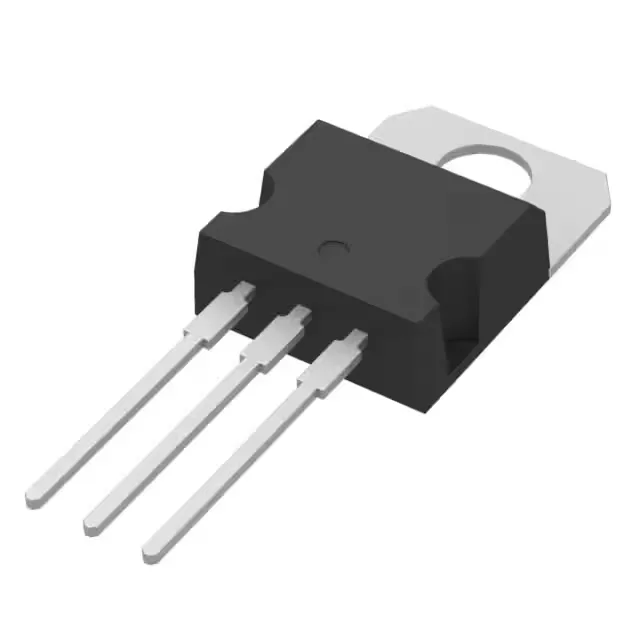
The STP150N10F7AG: The on-resistance is 4.2 mOhm maximum at 55 A with a 10 V gate drive. That's a low figure for a 100 V TO-220 part — it keeps conduction losses under 0.5 W at 10 A RMS, which is what lets you get away with a modest clip-on heatsink in a ventilated enclosure. The gate charge is 127 nC at 10 V, so the driver needs to source about 1.3 A peak to switch it in 100 ns; a standard 1 A gate-driver IC will be marginal for fast hard-switching at high frequency.
Switching-loss trade-off vs the STP110N10F7 sibling
The closest peer in the same F7 family is the STP110N10F7, also a 100 V N-channel in TO-220. The STP110N10F7 has a higher Rds(on) of 7 mOhm at 55 A, but a lower gate charge of 60 nC at 10 V. So the STP150N10F7AG wins on conduction loss — about 40 % lower — at the cost of roughly double the gate-drive energy per switching cycle. For a 50 kHz hard-switched buck converter, the 150's higher Qg adds about 0.5 W to the driver dissipation; for a line-frequency motor contactor or a soft-switched LLC stage, the extra Qg is irrelevant and the lower Rds(on) is pure gain.