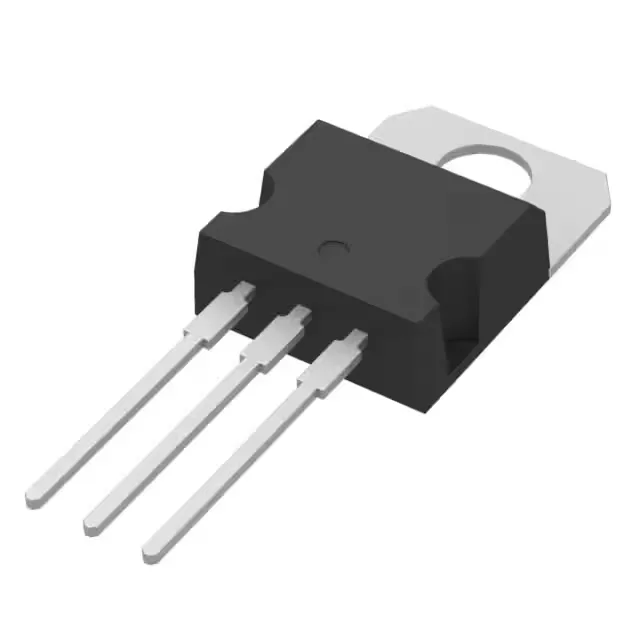
STMicroelectronics STP11NK50Z — Discrete Semiconductors

STP11NK50Z N-Channel MOSFET, 500 V, 10 A, SuperMESH

MPNSTP11NK50Z
Active

STMicroelectronics SuperMESH N-Channel MOSFET, 500 V drain-source, 10 A continuous drain, 520 mOhm Rds(on) at 10 V gate drive, 68 nC gate charge, TO-220-3 through-hole package, -55 to 150 °C operating range.

$3.1300Ref. price · indicative, final on quote
Independent supplier — new & surplus stockAuthenticity-screened · ESD-safe packingListing updated Aug 2026

Specifications

STP11NK50Z specifications
ParameterValue
SeriesSuperMESH™
FET typeN-Channel
MountingThrough Hole
Drain to source voltage500 V
Drive voltage (Max rds on, min rds on)10V
Current - continuous drain (Id) @ 25°C10A (Tc)
Power dissipation125W (Tc)
Operating temperature-55°C~150°C(TJ)
PackageTube
Vgs±30V
TechnologyMOSFET (Metal Oxide)
CaseTO-220-3
Vgs(th) (Max) @ id4.5V @ 100µA
Rds on (Max) @ id, vgs520mOhm @ 4.5A, 10V
Gate charge (Qg) (Max) @ vgs68 nC @ 10 V
Input capacitance (Ciss) (Max) @ vds1390 pF @ 25 V

Product details

Through-hole TO-220 — field-swappable, no hot-air station needed

The STP11NK50Z: The TO-220-3 package is a through-hole part. The 125 W power dissipation rating assumes the tab is bolted to a heatsink.

STMicroelectronics lists the STP11NK50Z as Active. No need to stockpile or hunt for a last-time-buy window.

Frequently asked questions

Can STP11NK50Z be used in high-frequency switching?

It can switch at frequencies up to about 100 kHz in a hard-switched topology, but above that the gate-drive losses and the driver's ability to charge/discharge that capacitance in the switching period become the limiting factor. For higher frequencies, look at a lower-gate-charge part in the same voltage class.

What is the difference between STP11NK50Z and STP11NK50ZFP?

The STP11NK50ZFP is the fully isolated TO-220FP version. The FP suffix means the tab is overmolded with plastic, so the tab is electrically isolated from the drain. The standard STP11NK50Z has the tab at drain potential. Electrically the die is the same; the isolation changes the thermal resistance and mounting requirements.