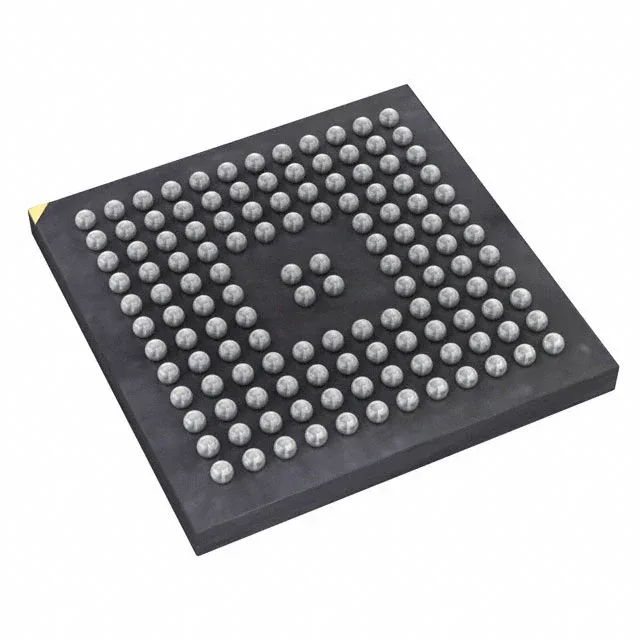
STMicroelectronics STM32L4R5QII6 — Microcontrollers & Processors (MCU / MPU / DSP)

STM32L4R5QII6 STM32L4R MCU, ARM Cortex-M4 120MHz, 2MB Flash

MPNSTM32L4R5QII6
Active

STMicroelectronics STM32L4R5QII6, STM32L4R series, 32-bit ARM Cortex-M4 MCU, 120 MHz, 2 MB Flash, 640 KB SRAM, 110 I/O, 1.71 V–3.6 V, -40°C to 85°C, 132-UFBGA (7x7 mm), Tray.

$16.4100Ref. price · indicative, final on quote
Packaging132-UFBGA
RoHSROHS3 Compliant
SeriesSTM32L4R
Independent supplier — new & surplus stockAuthenticity-screened · ESD-safe packingListing updated Aug 2026

Specifications

STM32L4R5QII6 specifications
ParameterValue
SeriesSTM32L4R
MountingSurface Mount
Oscillator typeInternal
Program memory typeFLASH
Voltage - supply (Vcc (Vdd))1.71V ~ 3.6V
Operating temperature-40°C ~ 85°C (TA)
Speed120MHz
PackageTray
RAM size640K x 8
Core size32-Bit Single-Core
PeripheralsBrown-out Detect/Reset, DMA, POR, PWM, WDT
ConnectivityCANbus, EBI/EMI, I²C, IrDA, LINbus, MMC/SD, SAI, SPI, UART/USART, USB OTG
Number of i (O)110
Core processorARM® Cortex®-M4
Case132-UFBGA
Data convertersA/D 16x12b; D/A 2x12b
Program memory size2MB (2M x 8)

Product details

What this Cortex-M4 brings to the board

It runs at 120 MHz and packs 2 MB of Flash program memory with 640 KB of SRAM, giving firmware plenty of headroom for complex control loops, graphics frame buffers, or over-the-air update staging. The 132-UFBGA package (7x7 mm) keeps the footprint tight, though the fine-pitch BGA calls for careful PCB layout and a controlled reflow profile.

With 110 I/O lines, this MCU can handle parallel buses, camera interfaces, or a large sensor array without external GPIO expanders. The connectivity list includes CANbus, I²C, SPI, UART/USART, USB OTG, SAI (serial audio), and an external memory interface (EBI/EMI) for NOR/NAND Flash or SRAM expansion.

Frequently asked questions

What is the difference between STM32L4R5QII6 and the STM32L151CBU6A?

The STM32L151CBU6A uses an older Cortex-M3 core at 32 MHz with less memory, while the STM32L4R5QII6 runs a Cortex-M4 at 120 MHz with 2 MB Flash and 640 KB SRAM. The L4R5 also offers more I/O (110 vs 37) and a wider supply range (1.71 V–3.6 V vs 1.8 V). The two are not pin-compatible and serve different performance tiers.