The STM32L4P5CEU6: The MCU integrates a full set of peripherals: brown-out detect, DMA, LCD driver, POR, PWM, and watchdog. Connectivity includes CANbus, EBI/EMI, I2C, IrDA, LINbus, MMC/SD, SAI, SPI, UART/USART, and USB OTG — enough to serve as the central controller in an IoT gateway, a motor-drive interface board, or a portable medical monitor. The 38 I/O lines in the 48-UFQFN package give reasonable breakout for mixed-signal designs.
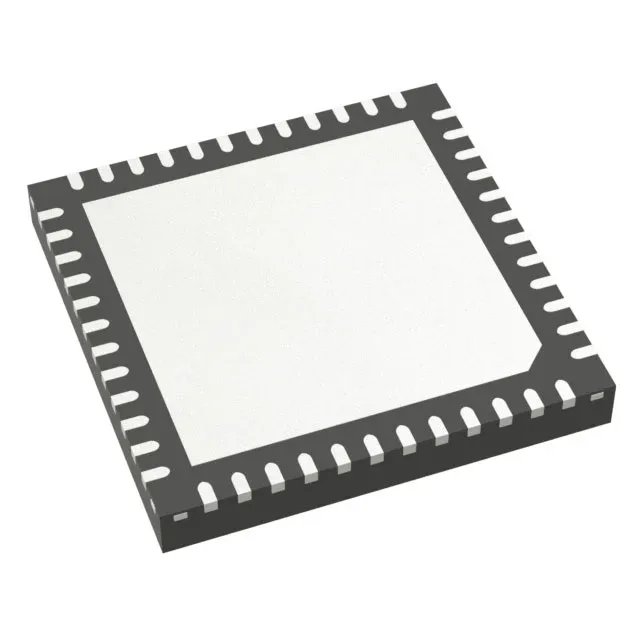
STM32L4P5CEU6 ARM Cortex-M4 MCU, 120 MHz, 512 KB Flash
MPNSTM32L4P5CEU6
Active
STMicroelectronics STM32L4 series, ARM Cortex-M4 32-bit MCU, 120 MHz, 512 KB Flash, 320 KB SRAM, 1.71 V to 3.6 V, 38 I/O, 48-UFQFN exposed pad, -40°C to 85°C.
$10.7600Ref. price · indicative, final on quote
Independent supplier — new & surplus stockAuthenticity-screened · ESD-safe packingListing updated Jul 2026
Specifications
| Parameter | Value |
|---|---|
| Series | STM32L4 |
| Mounting | Surface Mount |
| Oscillator type | Internal |
| Program memory type | FLASH |
| Voltage - supply (Vcc (Vdd)) | 1.71V ~ 3.6V |
| Operating temperature | -40°C ~ 85°C (TA) |
| Speed | 120MHz |
| Package | Tray |
| RAM size | 320K x 8 |
| Core size | 32-Bit Single-Core |
| Peripherals | Brown-out Detect/Reset, DMA, LCD, POR, PWM, WDT |
| Connectivity | CANbus, EBI/EMI, I2C, IrDA, LINbus, MMC/SD, SAI, SPI, UART/USART, USB OTG |
| Number of i (O) | 38 |
| Core processor | ARM® Cortex®-M4 |
| Case | 48-UFQFN Exposed Pad |
| Data converters | A/D 10x12b; D/A 2x12b |
| Program memory size | 512KB (512K x 8) |
Product details
Frequently asked questions
What is the closest pin-compatible alternative to STM32L4P5CEU6 in this component family?
Within the STM32L4 series, pin-compatible density variants exist (e.g., STM32L4P5xx with different Flash/SRAM sizes). The base product number STM32L4P5 shares the same footprint, so a swap requires checking the memory map and peripheral set, not the board layout.
What is STM32L4P5CEU6's listed speed?
The core runs at 120 MHz, which is the maximum clock for this Cortex-M4 device. At that speed, the Flash needs at least one wait state inserted; the STM32L4's prefetch buffer helps maintain single-cycle execution for sequential code.