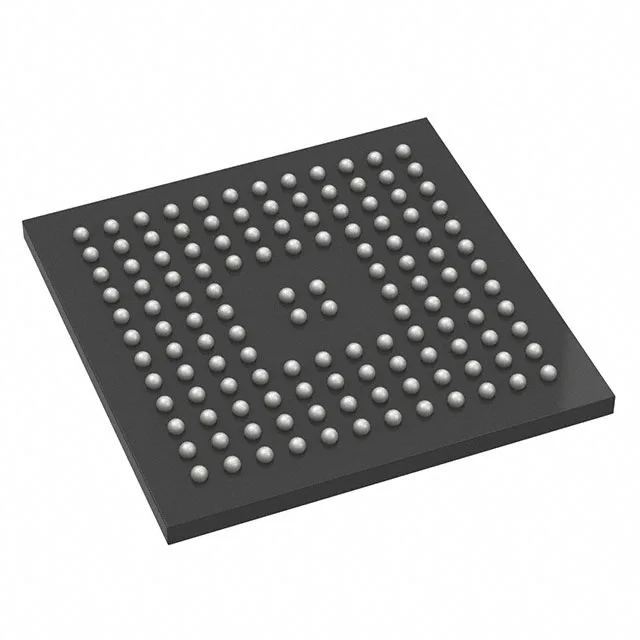
The 132-UFBGA package (7x7 mm) keeps the footprint small for space-constrained designs, but the fine-pitch BGA demands careful PCB layout and a controlled reflow profile.
80 MHz core speed and memory sizing for the firmware team
The 80 MHz Cortex-M4 with FPU handles single-cycle MAC operations and floating-point math without a software library, which matters for sensor fusion or motor-control loops. The 1 MB Flash is organized as 1M x 8; the 320 KB SRAM is enough for a real-time OS with multiple task stacks and a moderate frame buffer for a small LCD display. The Quad-SPI interface (listed under connectivity) lets you map external serial Flash or PSRAM into the memory space for data logging or OTA update staging without chewing up GPIO.
Industrial temperature range and analog integration
The brown-out detect and reset block (listed under peripherals) keeps the core from running on a drooping supply, which is critical in battery-powered or energy-harvesting designs.
ST lists the STM32L496QGI6S as an active product with no end-of-life notification. If the design later requires a different package or memory density, the STM32L496 base product number shares the same peripheral set across the family, making a pin-compatible migration straightforward within the UFBGA options.