80 MHz Cortex-M4 with 1 MB Flash — the ultra-low-power workhorse
It packs 1 MB of Flash and 128 KB of SRAM, enough for a full sensor-fusion stack, audio processing, or a small RTOS with a TCP/IP stack. Connectivity covers CANbus, USB OTG, QSPI, SAI (serial audio interface), and multiple I²C/SPI/UART ports, so it can talk to a CAN transceiver, an audio codec, and a QSPI NOR Flash on the same die without external bridges.
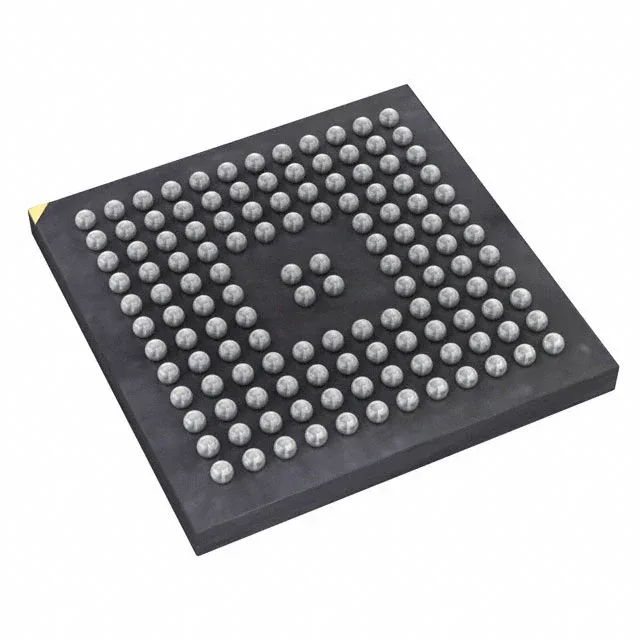
132-UFBGA (7x7) — layout and thermal reality
That is a dense BGA — route the outer two rows with a single via-in-pad escape; inner rows need microvias or a four-layer PCB. The exposed thermal pad in the centre must be stitched to a ground plane with at least nine vias to keep the junction below 85°C at full tilt. No heatsink fits this footprint; the PCB copper is the heatsink.
What the 80 MHz and peripherals mean for your design
The 80 MHz Cortex-M4 with FPU handles a 1024-point FFT in under 1 ms at 80 MHz — enough for real-time vibration analysis or a motor-control current loop. The LCD controller and the embedded Brown-out Detect/Reset reduce external BOM count for a handheld UI.