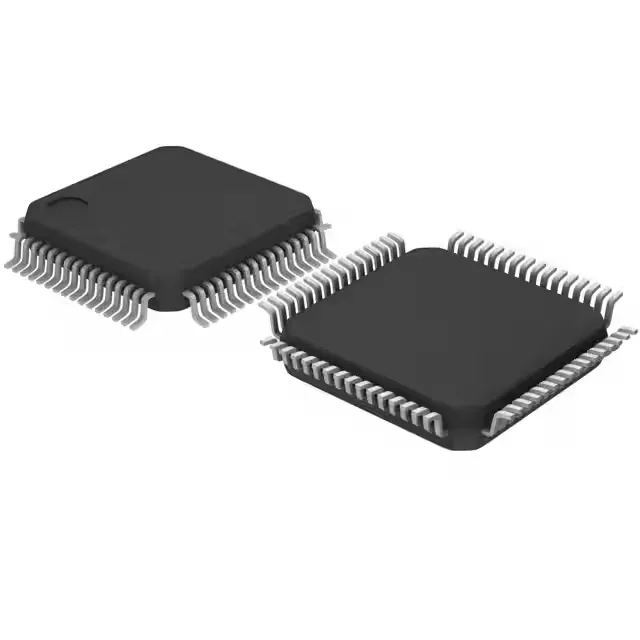
STMicroelectronics STM32L443RCT6 — Microcontrollers & Processors (MCU / MPU / DSP)

STM32L443RCT6 ARM Cortex-M4 MCU, 80 MHz, 256 KB Flash

MPNSTM32L443RCT6
Active

STMicroelectronics STM32L4 series, STM32L443RCT6, ARM Cortex-M4 32-bit MCU, 80 MHz, 256 KB Flash, 64 KB SRAM, 52 I/O, 64-LQFP, -40°C to 85°C.

$8.2200Ref. price · indicative, final on quote
Independent supplier — new & surplus stockAuthenticity-screened · ESD-safe packingListing updated Jul 2026

Specifications

STM32L443RCT6 specifications
ParameterValue
SeriesSTM32L4
MountingSurface Mount
Oscillator typeInternal
Program memory typeFLASH
Voltage - supply (Vcc (Vdd))1.71V ~ 3.6V
Operating temperature-40°C~85°C(TA)
Speed80MHz
PackageTray
RAM size64K x 8
Core size32-Bit Single-Core
PeripheralsBrown-out Detect/Reset, DMA, LCD, PWM, WDT
ConnectivityCANbus, I²C, IrDA, LINbus, MMC/SD, QSPI, SAI, SPI, SWPMI, UART/USART, USB
Number of i (O)52
Core processorARM® Cortex®-M4
Case64-LQFP
Data convertersA/D 16x12b; D/A 2x12b
Program memory size256KB (256K x 8)

Product details

80 MHz Cortex-M4 with FPU — what it buys you

The ARM Cortex-M4 core runs at 80 MHz with a single-precision floating-point unit. That clock rate puts it above the M3-class parts for DSP-style math (FIR filters, FFTs, motor-control loops) while staying in the power envelope that the STM32L4 architecture is known for.

Connectivity and peripheral mix

52 I/O lines are available, and the peripheral list includes CANbus, USB, QSPI, SAI, multiple I²C and SPI ports, plus an LCD controller.

Frequently asked questions

What is the difference between STM32L443RCT6 and STM32L433RCT6?

Both are STM32L4 series Cortex-M4 MCUs with identical Flash and SRAM sizes. The STM32L443RCT6 adds a USB interface and a DAC, which the STM32L433RCT6 lacks. If your design needs USB connectivity or an on-chip DAC, the STM32L443RCT6 is the correct choice.

What development board supports STM32L443RCT6?

The STM32L443RCT6 is pin-compatible with the STM32L4 series Nucleo-64 board (NUCLEO-L443RC) and the Discovery kit (STM32L4R9I-DISCO), both of which provide full access to the MCU's peripherals and debug interface.