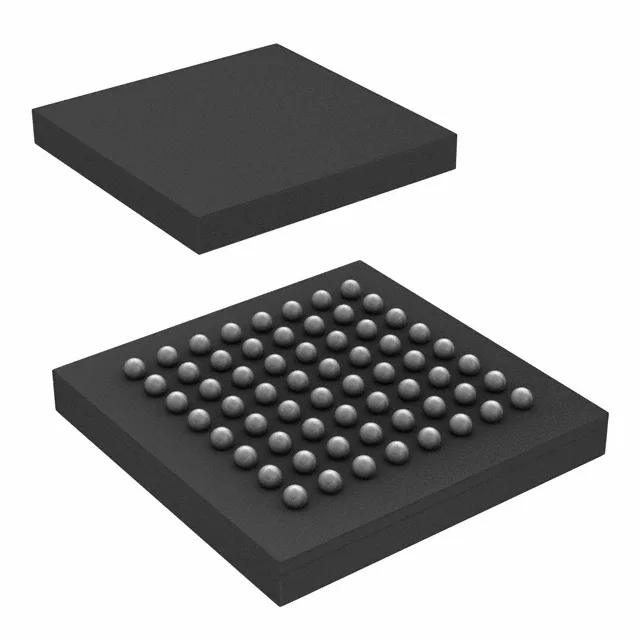
STMicroelectronics STM32L433RCI3 — Microcontrollers & Processors (MCU / MPU / DSP)

STM32L433RCI3 STM32L4 ARM Cortex-M4 MCU, 80 MHz

MPNSTM32L433RCI3
Active

STMicroelectronics STM32L433RCI3, STM32L4 series, 32-bit ARM Cortex-M4 MCU, 80 MHz, 256 KB Flash, 64 KB SRAM, 1.71 V to 3.6 V, -40°C to 125°C, 64-UFBGA (5x5 mm).

$8.8000Ref. price · indicative, final on quote
Packaging64-UFBGA
RoHSROHS3 Compliant
SeriesSTM32L4
Independent supplier — new & surplus stockAuthenticity-screened · ESD-safe packingListing updated Aug 2026

Specifications

STM32L433RCI3 specifications
ParameterValue
SeriesSTM32L4
MountingSurface Mount
Oscillator typeInternal
Program memory typeFLASH
Voltage - supply (Vcc (Vdd))1.71V ~ 3.6V
Operating temperature-40°C~125°C(TA)
Speed80MHz
PackageTray
RAM size64K x 8
Core size32-Bit Single-Core
PeripheralsBrown-out Detect/Reset, DMA, LCD, PWM, WDT
ConnectivityCANbus, I²C, IrDA, LINbus, MMC/SD, QSPI, SAI, SPI, SWPMI, UART/USART, USB
Number of i (O)52
Core processorARM® Cortex®-M4
Case64-UFBGA
Data convertersA/D 16x12b; D/A 2x12b
Program memory size256KB (256K x 8)

Product details

80 MHz Cortex-M4 in a 5x5 mm BGA — the power-constrained performance tier

It targets designs that need the DSP and FPU throughput of a Cortex-M4 but must stay within the ultra-low-power envelope of the STM32L4 family — think battery-operated instrumentation, sensor fusion hubs, and portable medical devices where every milliamp matters.

The STM32L4's multiple low-power modes (sleep, stop, standby) still function across the full temperature span, which is not guaranteed on every MCU in this class.

256 KB Flash / 64 KB SRAM — sizing the firmware and data buffer

That Flash is enough for a full RTOS, a USB stack, and a moderately complex application layer; the 64 KB SRAM handles dual frame buffers for a 320x240 display or a large circular DMA buffer for sensor data. The 12-bit ADC (16 channels) and dual 12-bit DAC are on-chip, so mixed-signal front-ends don't consume extra package pins or board area.

Connectivity and peripherals — CAN, USB, QSPI, and more

The QSPI interface lets you memory-map an external serial Flash for code-execution or data-logging expansion without chewing up GPIO. Brown-out detect and reset, DMA, an LCD controller, PWM, and a watchdog timer round out the on-chip resources. With 52 I/O lines in the 64-UFBGA, most of these peripherals can be active simultaneously.

For a production BOM being qualified today, this MCU is a safe selection — no forced redesign horizon from the manufacturer.

Frequently asked questions

How does STM32L433RCI3 compare to the older STM32L151CBU6A?

The STM32L433RCI3 runs an ARM Cortex-M4 at 80 MHz with FPU and DSP instructions, versus the Cortex-M3 at 32 MHz in the STM32L151CBU6A. The L4 part also offers more SRAM (64 KB vs 16 KB), a wider supply range down to 1.71 V, and a higher temperature grade (125°C vs 85°C). The L151 is a lower-cost, lower-power alternative for 8/16-bit application upgrades; the L433 is the performance tier for signal-processing and mixed-signal workloads.

What development board supports STM32L433RCI3?

The NUCLEO-L433RC-P and STM32L433RC-DISCO discovery boards support the STM32L433RC series. These boards provide access to the full peripheral set for prototyping and firmware development.