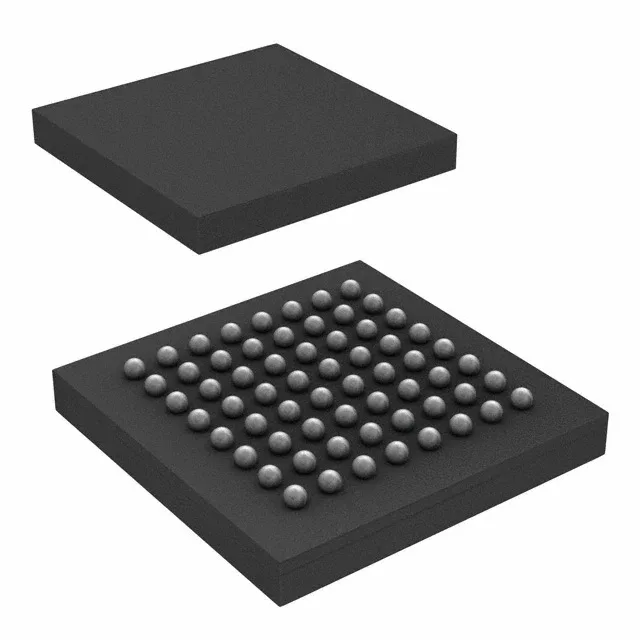
What this STM32L412RBI6 brings to the board
The 80 MHz core speed is the headline differentiator against the earlier STM32L1 series (which tops out at 32 MHz). For a control loop or a real-time data pipeline, that extra clock headroom translates to tighter timing margins — you can run a PID loop at several kHz and still have cycles left for communication stack processing. The Cortex-M4 includes a single-cycle multiply and a hardware FPU, so floating-point sensor math doesn't stall the pipeline. If your firmware does any DSP-style filtering or FFT work, this core handles it without a separate coprocessor.
Memory sizing: 128 KB Flash, 40 KB SRAM
The Flash is enough for a FreeRTOS-based application with a USB stack, a couple of communication protocols, and moderate application logic. The 40 KB SRAM gives room for a few large buffers — useful for USB packet handling or a display frame buffer at modest resolution. If your firmware needs more than that, the Quad SPI interface lets you attach external PSRAM or Flash without chewing up general-purpose I/Os.
Package and assembly: 64-UFBGA (5x5 mm)
That's a fine-pitch BGA — not something you swap in the field with a soldering iron. It needs a controlled reflow profile, X-ray inspection after assembly, and a stencil designed for the ball pattern. The upside is a very compact footprint for a 52-I/O part, which helps when board space is tight.
Supply voltage and power management
That flexibility simplifies the power tree in battery-powered designs — no boost converter needed. The STM32L4 series is known for its low-power modes (stop-mode current in the microamp range), though the exact numbers aren't in this evidence. If your design spends most of its time sleeping and wakes briefly to process a sensor readout, this MCU family is built for that duty cycle.
ST's STM32L4 series is a mainstream portfolio, so supply through the independent distribution channel is generally stable.