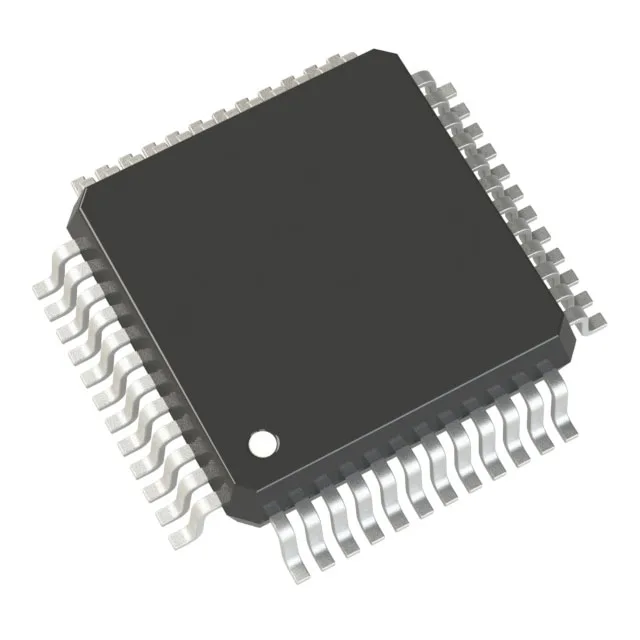
32 MHz Cortex-M0+ with on-chip EEPROM — the low-power BOM anchor
It carries 192 KB of Flash program memory, 20 KB of SRAM, and a separate 6 KB EEPROM array that survives 100k write cycles — enough to store calibration constants or configuration data without an external serial EEPROM. This is the part you pick when the board needs to sip microamps in stop mode and still wake to handle I²C or SPI traffic.
192 KB Flash, 20 KB RAM, 6 KB EEPROM — memory fit for a field-upgradable node
Program memory at 192 KB (192K x 8) covers moderate firmware loads — a Bluetooth stack, a Modbus RTU slave, or a sensor-fusion algorithm. The 20 KB SRAM is tight for heavy buffering; if your application queues large ADC logs or runs a TCP/IP stack, budget for external RAM or step to the STM32L4 series. The 6 KB EEPROM is the standout: it eliminates a separate memory IC and simplifies the BOM for applications that need non-volatile parameter storage without wear-leveling in Flash.
For battery-powered designs, this supply flexibility saves a regulator and its quiescent current.
STMicroelectronics lists the STM32L081CZT6 as Active. For supply-chain planning, the base product number STM32L081 is the reference for PCN and EOL notifications; ST typically gives 12–18 months notice before any discontinuation.
48-LQFP — rework-friendly, but watch the thermal mass
The leadframe has moderate thermal mass; a standard hot-air profile at 320°C with a fine nozzle lifts the part cleanly without lifting pads. MSL 3 out of the bag: bake at 125°C for 24 hours if the moisture barrier bag has been open longer than the floor-life window. The 48-LQFP footprint is common across the STM32L0 series, so a board layout can accept multiple Flash-density variants without a respin.