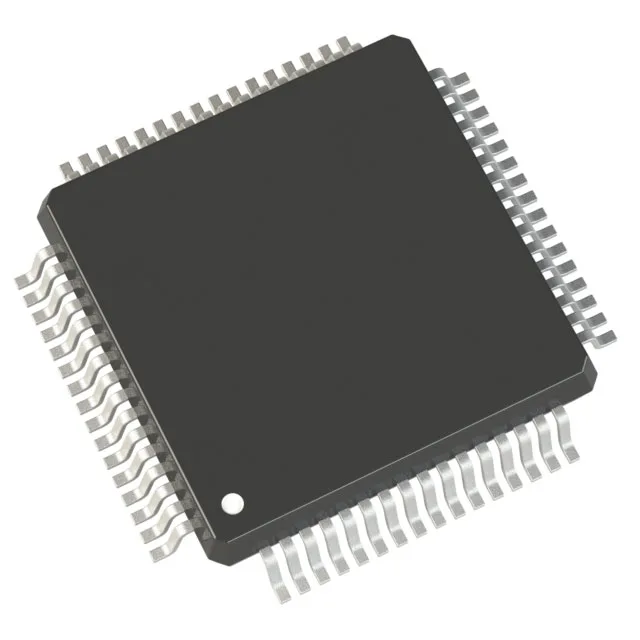
The 64-LQFP package (10x10 mm) gives 51 I/Os, including a 16-channel 12-bit ADC and two 12-bit DACs, plus USB, SPI, I²C, and UART connectivity.
Supply voltage and power rail decisions
At the low end it runs on a single 1.8 V rail common in coin-cell designs; at the high end it tolerates a 3.6 V Li-ion cell at full charge. No external LDO is needed for the core — the internal regulator handles the drop. If your system already has a 3.3 V rail, the STM32L072RBT6TR sits on it directly, but the real advantage is the 1.65 V floor for sub-2 V battery chemistries.
Embedded EEPROM — one less BOM line
The 6 KB EEPROM is rated for 100k write cycles and is byte-erasable, so you can store calibration constants, device serial numbers, or fault logs without wearing the Flash. This eliminates the external 24LCxx or 25LCxx serial EEPROM, saving about $0.10–0.20 per board and one I²C/SPI bus. The EEPROM is mapped into the memory space and accessible through a simple register interface — no special programming voltage needed.