32 MHz Cortex-M0+ with 1.65 V floor — the ultra-low-power baseline
It runs at 32 MHz and packs 128 KB of Flash, 20 KB of SRAM, and 6 KB of embedded EEPROM — the EEPROM eliminates the external serial memory chip for parameter storage. The supply range down to 1.65 V means it can run directly from a single alkaline cell or a Li-ion battery near end-of-discharge, which is the main reason you pick this over a 2.0 V-minimum Cortex-M0+ part.
Memory sizing — 128 KB Flash / 20 KB SRAM / 6 KB EEPROM
The 20 KB SRAM is tight for large buffers; plan your DMA and USB packet buffers carefully. The 6 KB EEPROM is a genuine hardware EEPROM, not emulated Flash, so you get 100k-cycle endurance per byte without wear-leveling code.
The 1.65 V minimum supply voltage is the headline feature of the STM32L0 family. Most competing Cortex-M0+ MCUs need at least 2.0 V or 2.4 V, which forces a boost converter or a second cell. Here you can run the MCU directly from a single AA alkaline (1.65 V at end-of-life) or a Li-ion cell (3.6 V max). The internal oscillator and all peripherals remain functional across the full range, so no brownout surprises when the battery sags.
For cabin or infotainment applications where the ambient stays below 85°C, it is fine — but verify the customer's thermal spec before committing.
Package and I/O — 32-UFQFPN with 25 GPIO
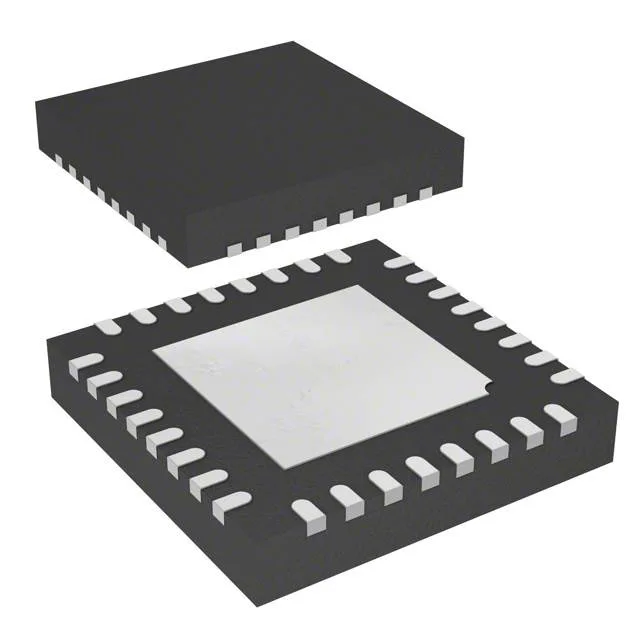
Housed in a 32-UFQFPN (5x5 mm) with an exposed pad, this package is a compact surface-mount footprint suited for space-constrained PCBs. The 25 I/O lines include peripherals such as I²C, SPI, UART/USART, USB, and IrDA.
STMicroelectronics lists the STM32L072KBU6TR as Active. This part is still in volume production and suitable for new designs. The base product number STM32L072 covers a range of density and package variants, so if you later need more Flash or a different pin count, you can move within the family without a full redesign.