Supply range and power — the real differentiator
That's the headline feature for any battery-powered or energy-harvesting design: you save a regulator and the associated quiescent current. The internal oscillator further reduces external component count, though the 32 MHz PLL still needs the flash wait state configured correctly during bring-up — a common first-power trap on the STM32L0 family.
Peripheral set and USB on-chip
It's a full-speed device controller, suitable for USB-to-serial bridges, HID-class peripherals, or firmware-update interfaces. The 29 GPIOs in a 36-ball package leave a few pins for the USB D+/D- pair and still offer room for sensor I²C and a UART debug header. On-chip data converters include a 12-bit ADC with 16 channels and a single 12-bit DAC, covering basic analog front-end needs without an external converter.
Package reality: 36-WLCSP
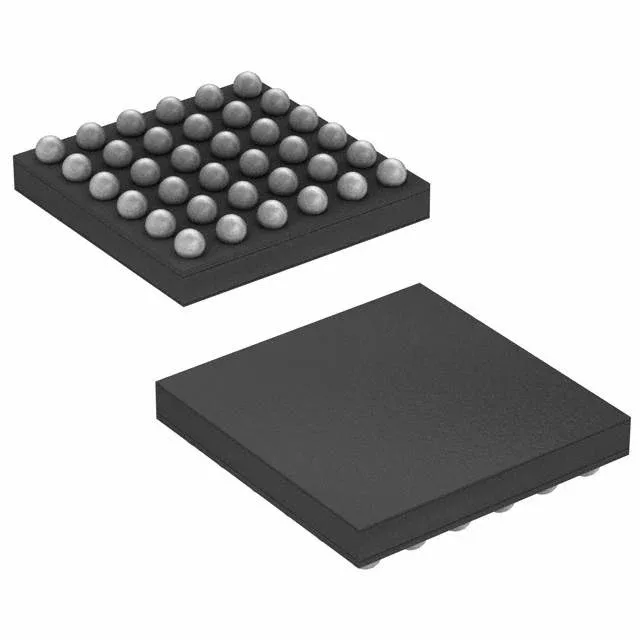
The 36-WLCSP (wafer-level chip-scale package, /) is the smallest footprint option for this MCU, but it demands careful assembly planning. The solder balls are on a fine pitch (typically 0.4 mm), so standard reflow profiles with a nitrogen atmosphere and proper stencil design are expected. This is not a hand-solder or rework-friendly package — plan for automated pick-and-place and X-ray inspection.
For procurement, this is a straightforward BOM line: no LTB math, no broker scavenger hunt.