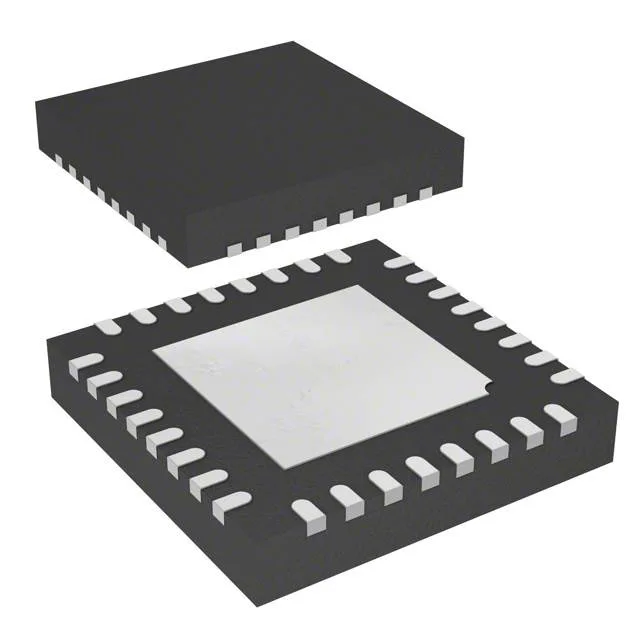
Ultra-low-power Cortex-M0+ with on-chip EEPROM
125 °C rating — industrial and automotive-adjacent environments
That makes it a fit for engine-bay-adjacent electronics, outdoor telecom cabinets, and industrial motor drives where ambient heat soaks the PCB. The 125 °C junction rating also gives thermal headroom when the MCU is running full-tilt near a power stage or a regulator.
64 KB of Flash is the mid-range density in the STM32L0 family — enough for a USB stack, a modest RTOS, and application code for a sensor-logging or control-loop design. The 8 KB RAM is the tight spot: it forces careful allocation of stack, heap, and DMA buffers. If your design needs a large frame buffer or double-buffered USB endpoints, you'll be budgeting every byte. The 2 KB EEPROM, organized as 2K x 8, is byte-addressable and rated for 100k erase/write cycles per the family datasheet, so configuration parameters and calibration constants don't wear out the Flash.
Package and thermal pad — layout notes
The datasheet's recommended footprint is 5x5 mm with a 3.2x3.2 mm exposed pad opening. No room for fan-out under the package; all 27 I/O and power pins route out on the perimeter.
ROHS3 compliant. The base product number is STM32L052, which covers multiple Flash and package variants in the same die family. For a production BOM, this is a safe choice — no imminent obsolescence risk, and ST's long-term support for the STM32L0 series is solid.