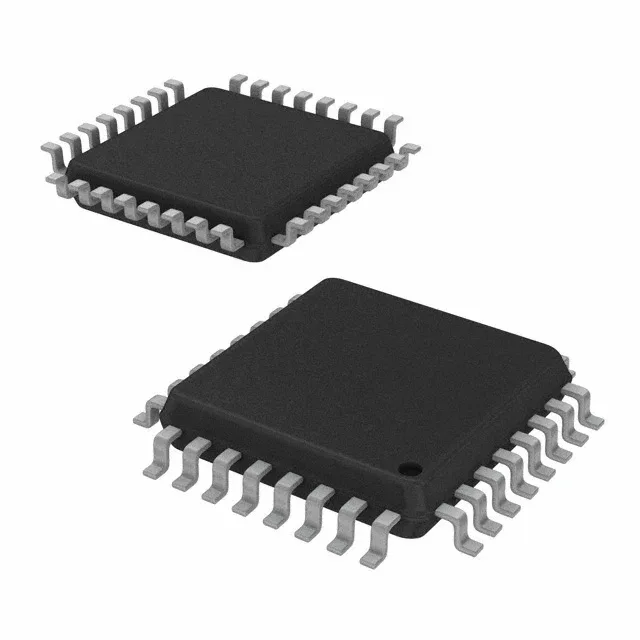
STMicroelectronics STM32L052K6T6 — Microcontrollers & Processors (MCU / MPU / DSP)

STM32L052K6T6 ARM Cortex-M0+ MCU, 32 MHz, 32-LQFP

MPNSTM32L052K6T6
Active

STMicroelectronics STM32L052K6T6, STM32L0 series, 32-bit ARM Cortex-M0+ MCU, 32 MHz, 32KB Flash, 8KB SRAM, 2KB EEPROM, 1.65V–3.6V, -40°C–85°C, 32-LQFP (7x7 mm).

$4.1600Ref. price · indicative, final on quote
Packaging32-LQFP
RoHSROHS3 Compliant
SeriesSTM32L0
Independent supplier — new & surplus stockAuthenticity-screened · ESD-safe packingListing updated Aug 2026

Specifications

STM32L052K6T6 specifications
ParameterValue
SeriesSTM32L0
MountingSurface Mount
Oscillator typeInternal
Program memory typeFLASH
Voltage - supply (Vcc (Vdd))1.65V ~ 3.6V
Operating temperature-40°C ~ 85°C (TA)
Speed32MHz
PackageTray
RAM size8K x 8
Core size32-Bit Single-Core
EEPROM size2K x 8
PeripheralsBrown-out Detect/Reset, DMA, POR, PWM, WDT
ConnectivityI²C, IrDA, SPI, UART/USART, USB
Number of i (O)27
Core processorARM® Cortex®-M0+
Case32-LQFP
Data convertersA/D 10x12b; D/A 1x12b
Program memory size32KB (32K x 8)

Product details

The base product number is STM32L052, and the series is STM32L0, which ST continues to support with development tools and firmware libraries. ROHS3 compliant, no special environmental restrictions beyond standard MSL handling for the LQFP package.

What the 1.65 V minimum supply means

The 1.65 V minimum operating voltage is the key differentiator in the STM32L0 family. It allows the MCU to run directly from a single alkaline cell down to near end-of-life voltage, or from a Li-ion cell through most of its discharge curve without a boost converter. Designs targeting coin-cell or two-AA battery systems should verify the Flash read speed at the lowest supply — at 1.65 V the 32 MHz clock may need wait states, but the core can still execute from SRAM at full speed.

Temperature grade and typical applications

It is not rated for 105°C or 125°C extended temperature, so avoid it for under-hood or downhole tools without thermal derating analysis. Typical application scenarios include battery-powered IoT edge nodes, portable medical monitors, smart sensors with USB connectivity, and low-power data loggers where the integrated EEPROM stores calibration or configuration data across power cycles.

Frequently asked questions

How does STM32L052K6T6 compare to STM32L151CBU6A?

The STM32L151CBU6A is a higher-tier part with an ARM Cortex-M3 core (vs. Cortex-M0+), 37 I/O (vs. 27), a 16-channel 12-bit ADC (vs. 10-channel), and two 12-bit DACs (vs. one). The L151 is a drop-in upgrade for designs needing more I/O or analog channels, but the L052's lower power draw and integrated EEPROM make it the better fit for cost- and power-sensitive sensor nodes.

What development board uses STM32L052K6T6?

STMicroelectronics offers the NUCLEO-L053R8 and STM32L0538-DISCO development boards for the STM32L0 series. While these boards use larger-package variants (LQFP64), the firmware and peripheral library are shared across the STM32L052 line, so code developed on those boards ports directly to the K6T6.

How to program STM32L052K6T6?

The MCU supports standard ARM Serial Wire Debug (SWD) via a 4-pin connector (SWDIO, SWCLK, VDD, GND). It can be programmed using any Cortex-M debug probe (ST-LINK, J-Link, DAPLink) and ST's STM32CubeProgrammer or any ARM-compatible IDE (Keil, IAR, STM32CubeIDE). The internal oscillator is enabled by default, so no external crystal is required for initial programming.