Memory sizing — what fits and what doesn't
The STM32L051K8T6TR: 64 KB of program Flash and 8 KB of SRAM. The 2 KB EEPROM supports byte-erasable writes without a separate Flash page-erase cycle.
The 1.65 V minimum supply is low enough to keep the MCU alive during a Li-ion cell's full discharge curve (down to about 2.7 V under load) and to interface directly with 1.8 V logic peripherals without level shifters. The 3.6 V maximum covers the full Li-ion charge voltage. For battery-powered designs, the stop-mode current (typically 0.4 µA with RTC running) is the headline number to budget against — the 32 MHz active current is about 100 µA/MHz, so the duty cycle of the application determines whether this part or a lower-speed Cortex-M0+ (like the STM32L031 at 32 MHz) is the better fit.
Package and I/O count
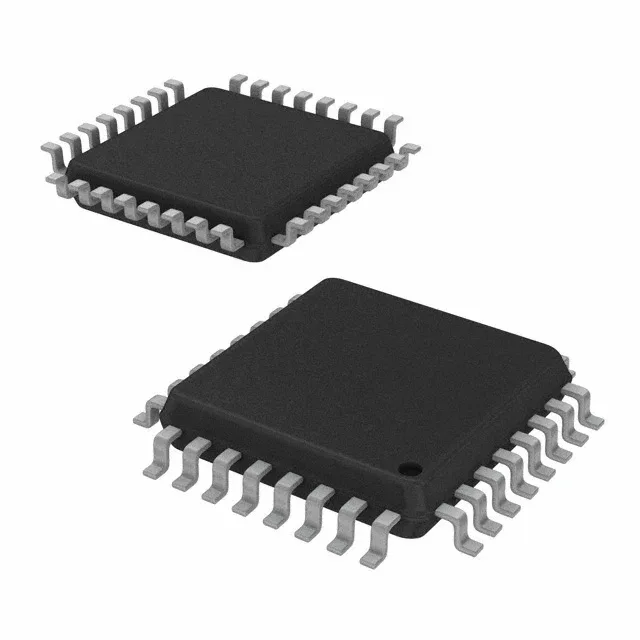
Housed in a 32-LQFP (7x7 mm) package, the STM32L051K8T6TR exposes 27 general-purpose I/Os. That's enough for a UART, an I²C bus, an SPI interface, and a handful of GPIOs for sensors or indicators — but tight for designs needing multiple parallel interfaces or a parallel LCD. The LQFP package is hand-solderable and rework-friendly, which helps during prototyping and low-volume production.
The 10-channel 12-bit ADC handles analog inputs like battery voltage, temperature, or sensor outputs without an external ADC.
No last-time-buy or allocation risk is known at this writing.