Active production part for low-power embedded designs
Memory and peripheral budget for sensor and control applications
The 512 bytes of EEPROM are useful for calibration constants, node IDs, or fail-state logs that survive a power cycle without wear-leveling overhead.
Supply rail and temperature range — battery and industrial fit
The 1.65 V minimum supply is the key enabler for single-cell battery designs: a near-depleted alkaline cell still holds the core operational. The 3.6 V upper limit is safe for Li-ion without an external LDO, though a clean rail is still recommended for the internal oscillator stability.
Package and footprint — 32-LQFP with 7x7 mm body
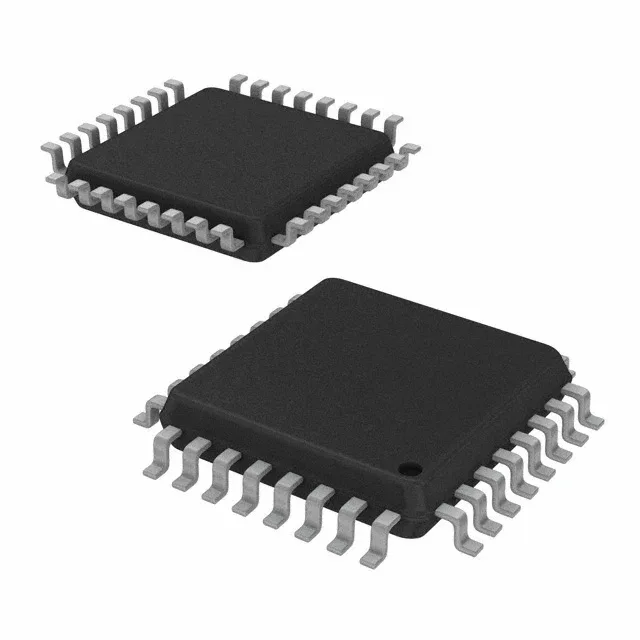
The 32-LQFP package with a 7x7 mm body and 0.8 mm pitch is a common footprint shared across the STM32L0 value-line density options. The 26 I/O are all accessible on the outer leads; no exposed pad underneath, so standard QFP soldering profiles apply.
Lifecycle status — active, no near-term EOL concern
For new designs, this means no forced redesign cycle from obsolescence in the next several years. The STM32L0 series has broad second-source availability through the STM32 ecosystem, though no pin-compatible second manufacturer exists — qualification of an alternate within the same family (e.g., a higher-density STM32L021) is the usual risk-mitigation path.
For volume production or kitting, we can provide pricing tiers and lead-time estimates on request. The active lifecycle means no premium for last-time-buy inventory — standard market pricing applies.