170 MHz — what the core speed buys you
For a field-oriented motor controller or a digital PFC stage, that clock headroom means you can run the control algorithm at higher PWM update rates without dropping into assembly.
The base product number STM32G431 covers a range of Flash and RAM density options in the same 48-LQFP footprint, so if firmware grows later, a pin-compatible drop-in with more memory exists within the family.
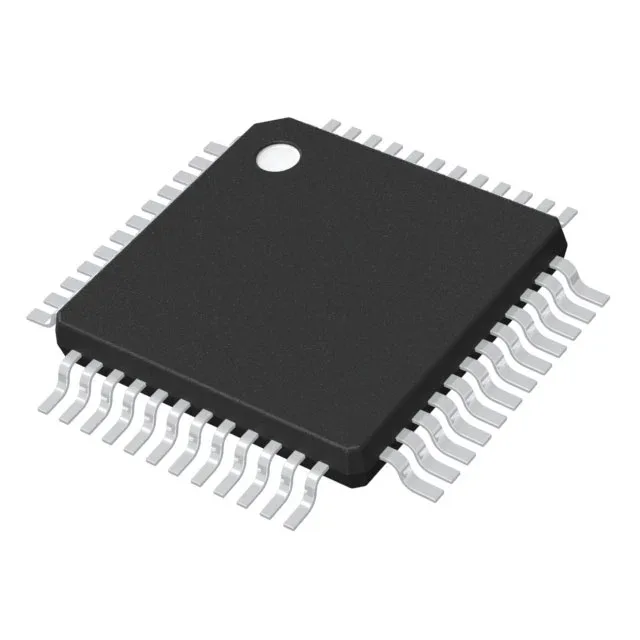
48-LQFP — field-swappable and rework-friendly
The 48-LQFP (7x7 mm) package is a standard gull-wing leaded part. You can hand-solder it with a fine-tip iron and some flux wick — no hot-air station required. That matters if you are doing prototype rework or field repairs where the ESD bench is the tailgate of a van. The 38 I/O pins give enough GPIO for a sensor array or a small display interface without needing a bigger package.