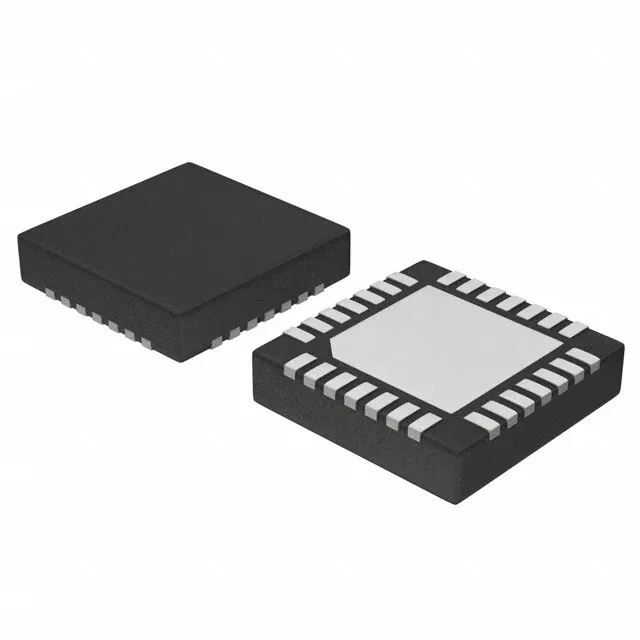
STMicroelectronics STM32G031G4U6 — Microcontrollers & Processors (MCU / MPU / DSP)

STM32G031G4U6 ARM Cortex-M0+ MCU, 64 MHz, 16 KB Flash

MPNSTM32G031G4U6
Active

STMicroelectronics STM32G0 series, STM32G031G4U6, 32-bit ARM Cortex-M0+ MCU, 64 MHz, 16 KB Flash, 8K x 8 RAM, 26 I/O, 1.7V-3.6V, 28-UFQFPN, -40°C to 85°C.

$3.0600Ref. price · indicative, final on quote
Packaging28-UFQFN
SeriesSTM32G0
Independent supplier — new & surplus stockAuthenticity-screened · ESD-safe packingListing updated Aug 2026

Specifications

STM32G031G4U6 specifications
ParameterValue
SeriesSTM32G0
MountingSurface Mount
Oscillator typeInternal
Program memory typeFLASH
Voltage - supply (Vcc (Vdd))1.7V ~ 3.6V
Operating temperature-40°C~85°C(TA)
Speed64MHz
PackageTray
RAM size8K x 8
Core size32-Bit Single-Core
PeripheralsBrown-out Detect/Reset, DMA, I²S, POR, PWM, WDT
ConnectivityI²C, IrDA, LINbus, SPI, UART/USART
Number of i (O)26
Core processorARM® Cortex®-M0+
Case28-UFQFN
Data convertersA/D 17x12b
Program memory size16KB (16K x 8)

Product details

64 MHz Cortex-M0+ in a 4x4 mm QFN — what the memory budget buys

The 28-UFQFPN package (4x4 mm) and 26 I/O lines let you fit it on a two-layer board without signal-routing headaches.

I/O and peripheral allocation for a 26-pin MCU

If your design needs a DAC or USB, this part won't fit — step up to the STM32G0B1 or STM32L1 series for those peripherals.

ST's STM32G0 series is their mainstream low-cost platform, so volume allocation and lead times are generally stable through the authorized channel.

Frequently asked questions

What is the difference between STM32G031G4U6 and STM32G031G8U6?

The STM32G031G8U6 doubles the Flash to 64 KB (64K x 8) while keeping the same 28-UFQFPN package, 26 I/O, and 64 MHz Cortex-M0+ core. The G4 variant's 16 KB Flash is the entry-level density; the G8 is the choice for firmware that needs more code space without a board respin.

How many I/O pins does STM32G031G4U6 have?

The STM32G031G4U6 provides 26 I/O pins in the 28-UFQFPN package. That's enough for a handful of sensors, a small display, and a serial interface, but you'll need to mux peripherals carefully if you use more than one SPI or UART simultaneously.