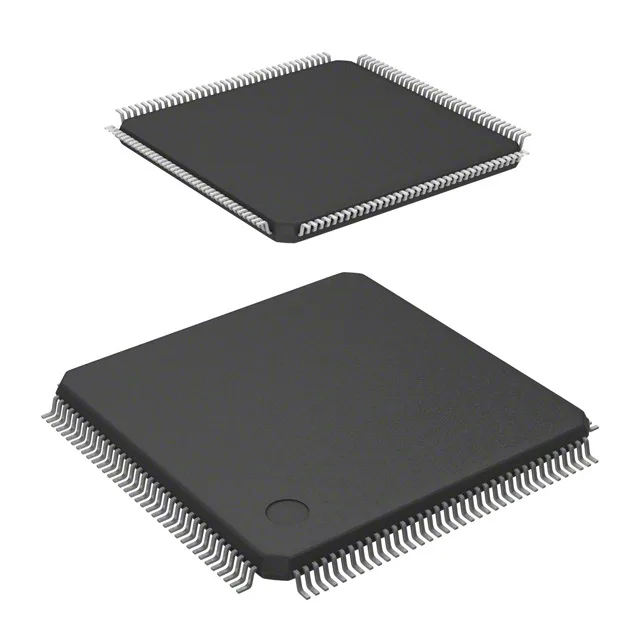
STMicroelectronics STM32F767ZIT6 — Microcontrollers & Processors (MCU / MPU / DSP)

STM32F767ZIT6 STM32F7 ARM Cortex-M7 MCU, 216MHz, 2MB Flash

MPNSTM32F767ZIT6
End of Life

STMicroelectronics STM32F7 series, ARM Cortex-M7 single-core at 216 MHz, 2 MB Flash / 512 KB RAM, 114 I/O, Ethernet, CANbus, I²C, SPI, USB OTG, QSPI, 24×12-bit ADC + 2×12-bit DAC, 1.7–3.6 V supply, -40 to 85 °C, 144-LQFP (20×20 mm) tray.

$21.4900Ref. price · indicative, final on quote
Independent supplier — new & surplus stockAuthenticity-screened · ESD-safe packingListing updated Jul 2026

Specifications

STM32F767ZIT6 specifications
ParameterValue
SeriesSTM32F7
MountingSurface Mount
Oscillator typeInternal
Program memory typeFLASH
Voltage - supply (Vcc (Vdd))1.7V ~ 3.6V
Operating temperature-40°C~85°C(TA)
Speed216MHz
PackageTray
RAM size512K x 8
Core size32-Bit Single-Core
PeripheralsBrown-out Detect/Reset, DMA, I²S, LCD, POR, PWM, WDT
ConnectivityCANbus, EBI/EMI, Ethernet, I²C, IrDA, LINbus, MMC/SD/SDIO, QSPI, SAI, SPDIF, SPI, UART/USART, USB OTG
Number of i (O)114
Core processorARM® Cortex®-M7
Case144-LQFP
Data convertersA/D 24x12b; D/A 2x12b
Program memory size2MB (2M x 8)

Product details

The STM32F767ZIT6 is STMicroelectronics' 32-bit ARM Cortex-M7 single-core MCU clocked at 216 MHz, backed by 2 MB of Flash and 512 KB of RAM. That clock rate puts it in the performance tier for signal processing and real-time control loops where a Cortex-M4 starts running out of headroom. The 2 MB program memory means you can hold a full application stack plus a bootloader and still have room for a modest filesystem image; the 512 KB RAM handles double-buffered display frames or a TCP/IP stack without external memory.

Connectivity and peripheral fit

This part carries Ethernet MAC, CANbus, USB OTG, QSPI, and a full set of I²C/SPI/UART interfaces — enough to serve as the main controller in an industrial gateway, a motor-drive comms processor, or a human-machine interface panel. Internal oscillator means you can bring up a UART bootloader without an external crystal, though the Ethernet PHY will still want a 25 MHz reference.

144-LQFP with a 20×20 mm body and 0.5 mm pitch — hand-solderable with a fine-tip iron and a loupe. No hidden balls, no X-ray needed for inspection. MSL 3 out of the bag: if the moisture-barrier bag has been open longer than the floor-life window, bake at 125 °C for 24 hours before reflow.

No LTB window to chase. The base product number STM32F767 covers a density range — if you later need more RAM or a different package, the family offers pin-compatible options without a board respin.

Frequently asked questions

What is the maximum operating frequency of STM32F767ZIT6?

The core runs at 216 MHz. At that speed the flash needs at least one wait state inserted; the STM32F7's ART Accelerator handles instruction cache to keep most tight loops at single-cycle fetch.

What is the closest pin-compatible alternative to STM32F767ZIT6 in the same family?

Within the STM32F767 line, the STM32F767ZGT6 shares the same 144-LQFP footprint and peripheral set but steps up to 1 MB RAM. For a cost-optimized build with the same pinout, the STM32F745ZGT6 drops the Ethernet MAC and runs at a lower clock — verify peripheral compatibility before swapping.