216 MHz Cortex-M7 — the performance tier that matters
It belongs to the STM32F7 series, the high-performance branch of the STM32 line, built for applications that need a real margin above what a Cortex-M4 at 72 MHz or a Cortex-M3 at 32 MHz delivers. The core is a single-core 32-bit implementation with a single-precision FPU and a 6-stage pipeline that sustains DSP and SIMD instructions without stalling on memory access — provided the ART Accelerator keeps the Flash prefetch fed. On the peripheral side, the 82 I/O lines connect to CANbus, Ethernet, USB OTG, QSPI, SAI, SPDIF, and multiple UART/USART and SPI interfaces. The data converters include 16 channels of 12-bit ADC and 2 channels of 12-bit DAC.
100-TFBGA — footprint and rework considerations
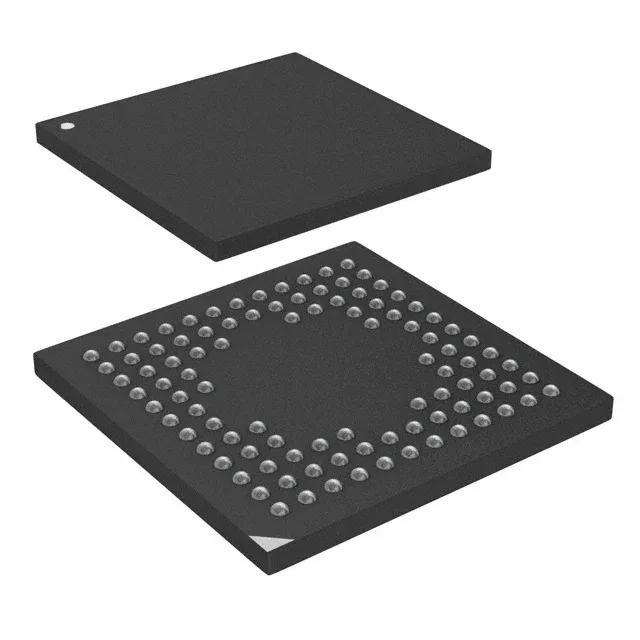
The supplier device package is a 100-TFBGA measuring 8x8 mm. That is a 0.8 mm ball pitch, which is manageable with standard SMT assembly but does demand via-in-pad or microvia routing for the inner balls. The 82 I/O count means about 18 balls are power or ground — check the ball map before laying out decoupling. For rework, a bottom-side preheat profile at 150°C with a focused nozzle on the top side works; the 8x8 mm body is small enough that thermal gradient across the package is not severe.
Industrial temperature range — deployment envelope
It fits factory automation panels, outdoor telecom cabinets, motor drives, and engine-bay-adjacent electronics that do not need the full -55°C military floor.
The base product number is STM32F765, which spans multiple density and package variants — if the 100-TFBGA footprint is not ideal, the STM32F765 line includes LQFP100 and other options with the same core and memory map.
Sourcing posture for this BOM line
This is a current-production STM32 part from STMicroelectronics, widely distributed through franchised channels and independent distribution. The active lifecycle means no premium for obsolete-stock hunting, and the multi-source distribution reach keeps lead times visible across the channel. If dual-sourcing resilience is a priority, the STM32F765 architecture is pin-compatible across the density options in the same package, so qualifying a sibling density as a second source is straightforward.