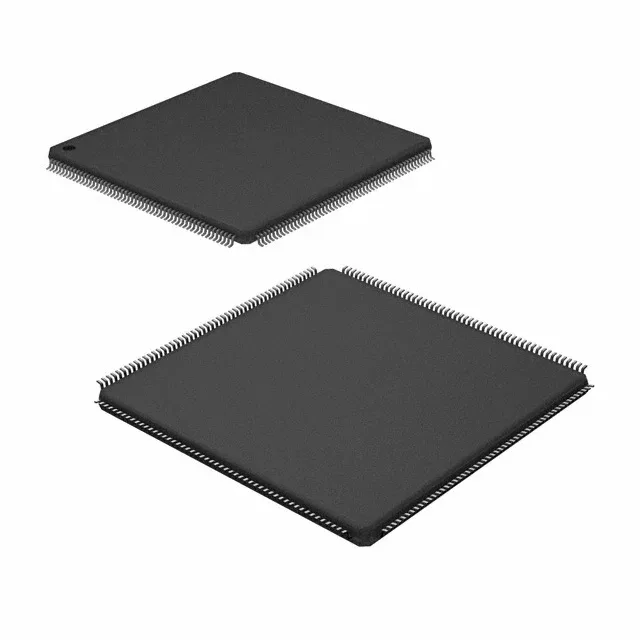
The STM32F765BIT6 runs a single-core ARM Cortex-M7 at 216 MHz, with 2 MB of on-chip flash and 512 KB of SRAM. That flash-to-RAM ratio leaves room for a full RTOS, a TCP/IP stack, and a graphical UI buffer without external memory — the 168 I/O pins in the 208-LQFP package give you enough lanes for a parallel TFT display or a memory-mapped FPGA interface.
Package and rework — 208-LQFP with a thermal paddle
That's a hand-solderable package if you have a fine tip and steady hands, but the exposed thermal paddle underneath needs a good solder joint to the board's copper pour — without it, the junction-to-ambient thermal resistance climbs and the chip throttles earlier under sustained load. Pin 1 is marked with a chamfered corner and a dot on the package top — easy to spot under magnification. The 0.5 mm pitch means a 0.3 mm stencil aperture for the signal pins; the paddle needs a larger opening with a 75-80% solder coverage target to keep thermal resistance under 25 °C/W.
Supply voltage and temperature grade — where this chip lives
RoHS3 compliant per the lifecycle record.