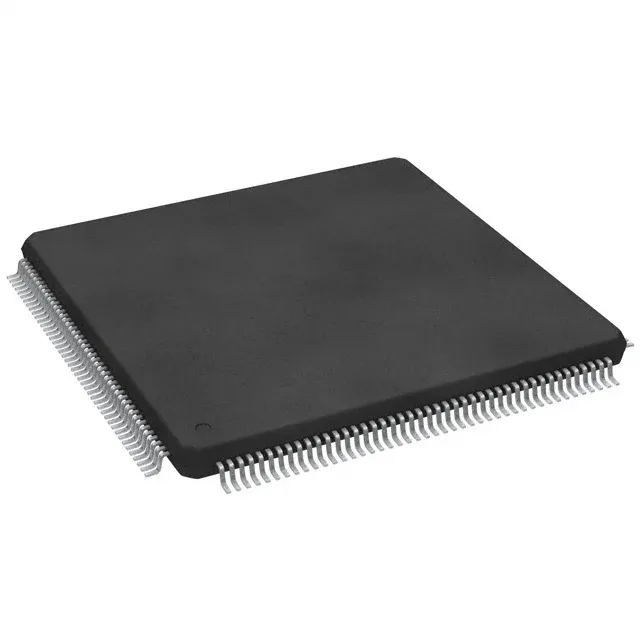
STMicroelectronics STM32F746IGT7 — Microcontrollers & Processors (MCU / MPU / DSP)

STM32F746IGT7 MCU, ARM Cortex-M7, 216 MHz, 1 MB Flash

MPNSTM32F746IGT7
Active

STMicroelectronics STM32F7 series, STM32F746IGT7, ARM Cortex-M7, 32-Bit Single-Core, 216 MHz, 1 MB Flash, 320K x 8 RAM, 140 I/O, CANbus, Ethernet, USB OTG, 176-LQFP, -40°C ~ 105°C.

$20.2300Ref. price · indicative, final on quote
Packaging176-LQFP
RoHSROHS3 Compliant
SeriesSTM32F7
Independent supplier — new & surplus stockAuthenticity-screened · ESD-safe packingListing updated Aug 2026

Specifications

STM32F746IGT7 specifications
ParameterValue
SeriesSTM32F7
MountingSurface Mount
Oscillator typeInternal
Program memory typeFLASH
Voltage - supply (Vcc (Vdd))1.7V ~ 3.6V
Operating temperature-40°C ~ 105°C (TA)
Speed216MHz
PackageTray
RAM size320K x 8
Core size32-Bit Single-Core
PeripheralsBrown-out Detect/Reset, DMA, I²S, LCD, POR, PWM, WDT
ConnectivityCANbus, EBI/EMI, Ethernet, I²C, IrDA, LINbus, SAI, SD, SPDIF-Rx, SPI, UART/USART, USB OTG
Number of i (O)140
Core processorARM® Cortex®-M7
Case176-LQFP
Data convertersA/D 24x12b; D/A 2x12b
Program memory size1MB (1M x 8)

Product details

216 MHz Cortex-M7 with 1 MB Flash — what the memory map means for the BOM

The Cortex-M7 core with single-precision FPU and DSP extensions handles real-time control loops and audio processing without an external DSP. The 1 MB Flash is sized for a full-featured firmware image including a GUI stack, TCP/IP stack, and application logic; the 320 KB SRAM leaves room for double-buffered display frames and packet buffers in Ethernet or USB OTG applications.

Frequently asked questions

Does STM32F746IGT7 have an integrated LCD controller?

The peripheral list includes an LCD interface (listed under Peripherals), supporting parallel TFT-LCD panels. The 320 KB SRAM can serve as a display frame buffer for moderate resolutions.

What is the difference between STM32F746IGT7 and STM32F746IGK6?

Both share the same Cortex-M7 core and 1 MB Flash, but the IGK6 variant uses a 176-UFBGA package versus the 176-LQFP of the IGT7. The BGA package offers a smaller footprint (10x10 mm vs 24x24 mm) but requires more complex PCB routing and assembly. The IGT7 in LQFP is easier to hand-solder and inspect, making it the preferred choice for prototyping and medium-volume production.