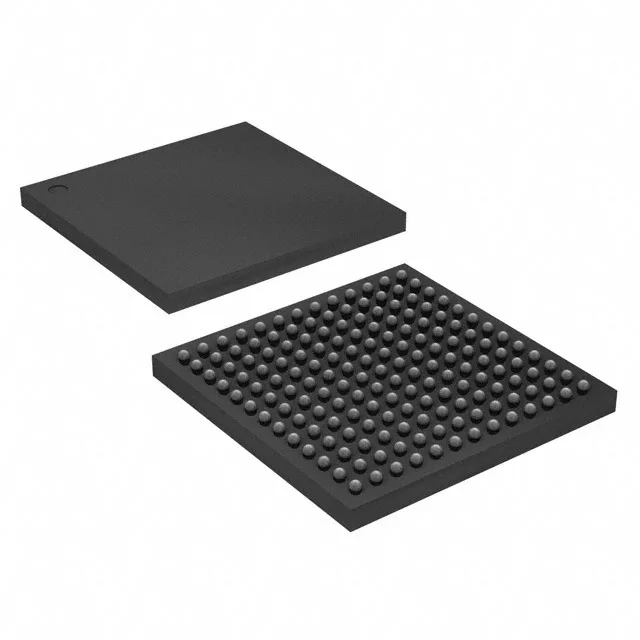
STM32F479AGH6 — STM32F4 180MHz Cortex-M4 MCU, 1MB Flash, 169-UFBGA
STMicroelectronics STM32F4 high-performance line, STM32F479AGH6, 180MHz ARM Cortex-M4 single-core, 1MB Flash, 384KB RAM, 24x12b A/D and 2x12b D/A converters, Ethernet/USB OTG/CANbus/LINbus/SAI/SDIO/SPI/I²C, 114 I/O, 1.7–3.6V, -40 to 85°C, 169-UFBGA surface-mount tray.
Specifications
| Parameter | Value |
|---|---|
| Series | STM32F4 |
| Mounting | Surface Mount |
| Oscillator type | Internal |
| Program memory type | FLASH |
| Voltage - supply (Vcc (Vdd)) | 1.7V ~ 3.6V |
| Operating temperature | -40°C ~ 85°C (TA) |
| Speed | 180MHz |
| Package | Tray |
| RAM size | 384K x 8 |
| Core size | 32-Bit Single-Core |
| Peripherals | Brown-out Detect/Reset, DMA, I²S, LCD, POR, PWM, WDT |
| Connectivity | CANbus, EBI/EMI, Ethernet, I²C, IrDA, LINbus, SAI, SDIO, SPI, UART/USART, USB, USB OTG |
| Number of i (O) | 114 |
| Core processor | ARM® Cortex®-M4 |
| Case | 169-UFBGA |
| Data converters | A/D 24x12b; D/A 2x12b |
| Program memory size | 1MB (1M x 8) |
Frequently asked questions
What are the key differences between the STM32F479AGH6 and the STM32F429ZI for an industrial control board?
The STM32F479AGH6 offers 24 ADC channels versus the F429ZI's 16 — eight more inputs for multi-sensor panels. Both run 180MHz Cortex-M4 with Ethernet and USB OTG. The trade-off is package: the F429ZI uses a 144-pin LQFP (easier to rework) while the F479AGH6 is 169-UFBGA (smaller footprint, BGA rework required).
What does the eol_hot lifecycle flag mean for my spare-parts inventory?
eol_hot signals the part is approaching end-of-life with an active last-time-buy window. For long-run industrial products, treat this as a lifecycle risk on the BOM line — source forward coverage now, and confirm with ST whether authorized second-source stock in the same 169-UFBGA footprint exists before assuming a broker-channel fallback is sufficient.