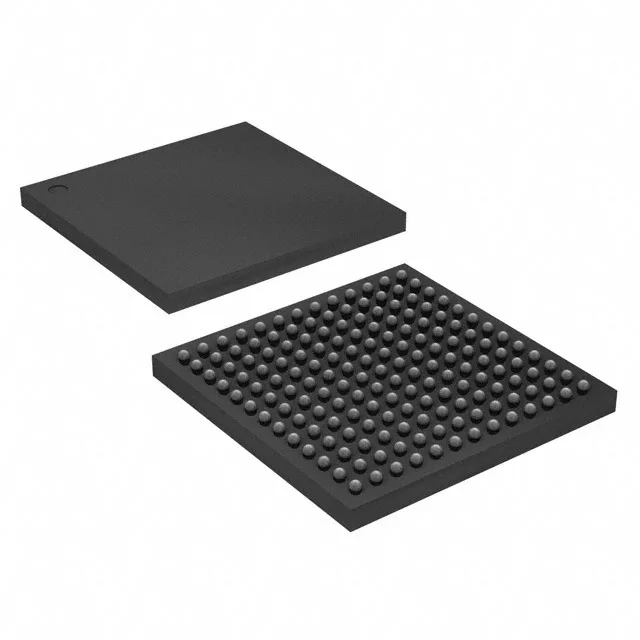
STMicroelectronics STM32F469AEH6 — Microcontrollers & Processors (MCU / MPU / DSP)

STM32F469AEH6 STM32F4 ARM Cortex-M4 MCU, 180MHz, 512KB Flash

MPNSTM32F469AEH6
End of Life

STMicroelectronics STM32F4 series, STM32F469AEH6, 32-bit ARM Cortex-M4 single-core MCU, 180MHz, 512KB Flash, 384KB RAM, 1.7V–3.6V, 169-UFBGA (7x7mm), -40°C to 85°C.

$9.1335Ref. price · indicative, final on quote
Independent supplier — new & surplus stockAuthenticity-screened · ESD-safe packingListing updated Jul 2026

Specifications

STM32F469AEH6 specifications
ParameterValue
SeriesSTM32F4
MountingSurface Mount
Oscillator typeInternal
Program memory typeFLASH
Voltage - supply (Vcc (Vdd))1.7V ~ 3.6V
Operating temperature-40°C ~ 85°C (TA)
Speed180MHz
PackageTape & Reel (TR)
RAM size384K x 8
Core size32-Bit Single-Core
PeripheralsBrown-out Detect/Reset, DMA, I²S, LCD, POR, PWM, WDT
ConnectivityCANbus, EBI/EMI, Ethernet, I²C, IrDA, LINbus, SAI, SDIO, SPI, UART/USART, USB, USB OTG
Number of i (O)114
Core processorARM® Cortex®-M4
Case169-UFBGA
Data convertersA/D 24x12b; D/A 2x12b
Program memory size512KB (512K x 8)

Product details

Connectivity and analog integration for industrial BOM consolidation

The peripheral set on this part reduces the need for external interface chips. Connectivity includes Ethernet MAC, CAN 2.0B, USB OTG (host/device), multiple SPI and I²C buses, SDIO for external storage, and SAI for audio serial interfaces. The 114 general-purpose I/O pins, many with 5 V tolerance, give headroom for parallel LCD data buses and keypad matrices.

169-UFBGA (7x7 mm) — footprint and rework considerations

This MCU comes in a 169-ball ultra-fine-pitch BGA (169-UFBGA) measuring 7x7 mm. The 7x7 mm body makes hot-air reballing feasible with a stencil, but inspection requires X-ray for hidden solder joints.

Frequently asked questions

What is the difference between STM32F469AEH6 and STM32F469NIH6?

The key difference is the package and pin count. STM32F469AEH6 comes in a 169-UFBGA (7x7 mm) while STM32F469NIH6 is in a 216-ball TFBGA package. The 216-ball variant offers more I/O and a different ball map, so they are not pin-compatible — a board redesign is required to swap between them. Both share the same core, 180 MHz speed, and 512 KB Flash / 384 KB RAM memory configuration.

Can STM32F469AEH6 be used for real-time control applications?

Yes. The 12-bit ADC with up to 24 channels can sample multiple feedback signals, and the PWM timers with dead-time insertion drive power stages directly. The 384 KB SRAM provides enough working memory for control data arrays without external RAM.

What development tools are compatible with STM32F469AEH6?

Standard ARM Cortex-M4 development tools work: STM32CubeIDE (free, ST's own IDE), Keil MDK-ARM, IAR Embedded Workbench, and GCC-based toolchains. Debug and programming use the SWD (Serial Wire Debug) interface via an ST-Link/V2 or J-Link probe. The STM32CubeMX graphical configurator can generate initialization code for the clock tree, GPIO, and peripherals specific to this part.

Is STM32F469AEH6 lead-free?

Yes, STMicroelectronics manufactures this part as lead-free and RoHS-compliant, consistent with the STM32F4 series environmental compliance. The 169-UFBGA package uses lead-free solder balls.

What is the EOL status of STM32F469AEH6?

The lifecycle status is Active, meaning no end-of-life announcement has been issued. There is no last-time-buy schedule in effect. Continue to monitor ST's PCN notifications for any future changes, but as of now the part is in stable production.