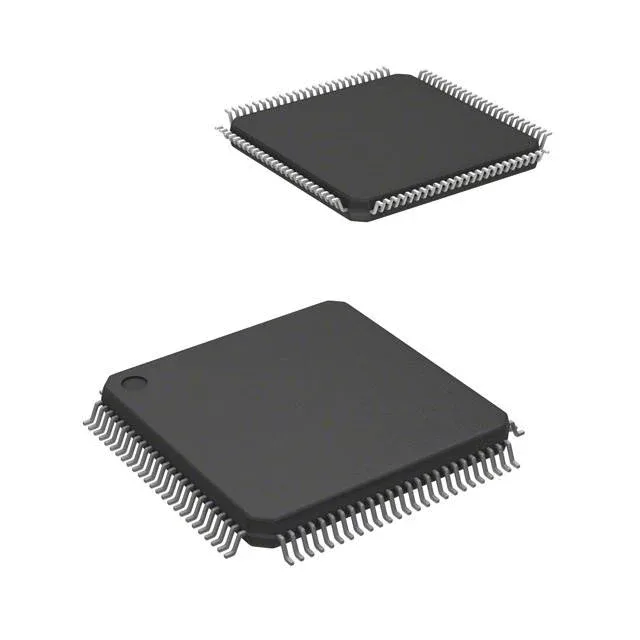
The 180 MHz core clock is the headline number, but the real value is the single-cycle DSP extensions and single-precision floating-point unit that come with the Cortex-M4. That means a 32-bit FIR filter or a PID loop with floating-point coefficients runs without a software emulation tax. The 128 KB of RAM gives enough headroom for a real-time operating system heap, a few moderate-sized frame buffers, or a protocol stack — but if your application needs a large display buffer or extensive data logging, you will want to audit the RAM budget early. The 256 KB Flash is sized for mid-complexity firmware; the STM32F4 series has larger-density siblings if the code image outgrows it.
Connectivity and peripherals — what is on the bus
This MCU includes CANbus (2.0B active), USB OTG (full-speed and high-speed with on-chip PHY), SPDIF-Rx for digital audio input, SAI for I²S audio, and an external memory interface (EBI/EMI) that can gluelessly attach SRAM, NOR Flash, or an LCD controller. The 12-bit ADC has 16 channels, and there are two 12-bit DACs. For a design that needs to talk to a CAN network, log data to an external parallel SRAM, and stream audio over I²S, the STM32F446VCT6 covers all of that without an external bridge chip.
Package and layout — 100-LQFP with exposed pad
A via-stitched thermal land under the pad, connected to a ground plane, is the standard practice.