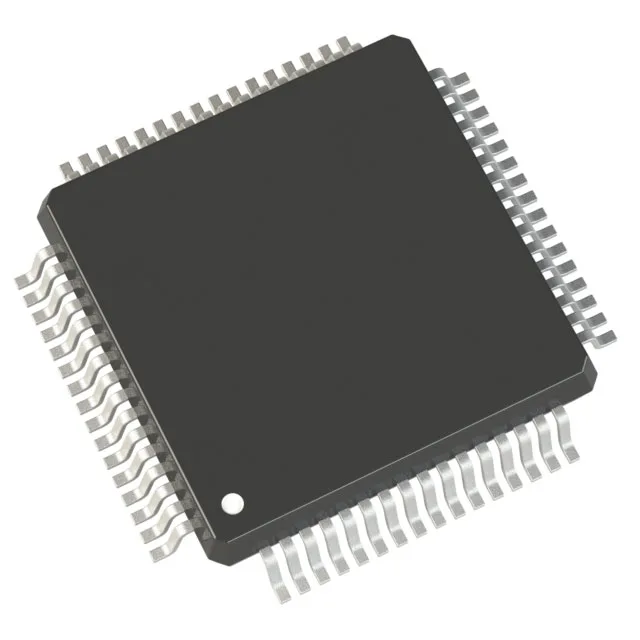
What the STM32F446RCT7 brings to the board
It's built for applications that need a balance of DSP performance and peripheral integration — motor drives, industrial control, audio processing, and IoT gateways that talk over CAN, USB OTG, or multiple SPI/I²C buses.
The 180 MHz core speed puts this part in the performance tier of the STM32F4 family. With a single-cycle multiply and hardware FPU, it handles FFTs, PID loops, and sensor fusion without a separate DSP. The flash wait states need attention at this clock — the datasheet recommends 5 wait states above 150 MHz, so budget for that in your timing closure if you're running tight loops from Flash.
256 KB of program Flash and 128 KB of SRAM give enough room for a real-time OS, a TCP/IP stack, and moderate application code. The 128 KB RAM handles double-buffered audio or two CAN message queues without overflow. If your firmware needs more than this, the STM32F446RE variant doubles the Flash to 512 KB while staying pin-compatible.
The part includes CANbus, USB OTG (FS), SPDIF-Rx, SAI (serial audio interface), and up to 6 SPI/I²C ports. The 50 GPIOs are enough for a TFT display, keypad, and external memory via the EBI/EMI interface. Brown-out reset, POR, and a programmable voltage detector are on-chip, reducing external supervisor IC count.