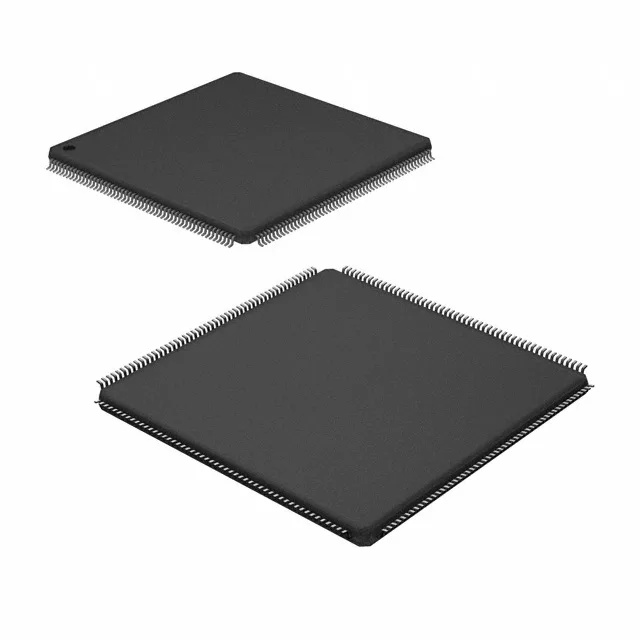
180 MHz Cortex-M4 with 2 MB Flash — what the specs mean for the design
Ethernet, CAN, and the LCD controller — peripheral fit for a system-on-chip
The connectivity set is the strongest argument for this part over smaller STM32F4 siblings. Ethernet MAC with dedicated DMA means you can run a lightweight TCP/IP stack without an external PHY management burden — the RMII interface connects directly to a PHY like the LAN8720. Two CAN 2.0B controllers handle the fieldbus side, and the USB OTG FS/HS with on-chip PHY covers device or host roles. The LCD parallel interface supports up to 24-bit RGB, which drives a 480x272 TFT panel directly from the internal SRAM or external NOR/NAND Flash via the FMC. The 12-bit ADC bank has 24 channels, enough for current-sense and temperature monitoring on a three-phase motor drive without external muxing.
The base product number STM32F439 spans several density and package variants, so if a future board spin needs a different pin count or temperature grade, the migration stays within the same family without a full software port.
Package and supply — 208-LQFP layout notes
Supply decoupling should follow the STM32F4 reference design: one 100 nF per VDD/VSS pair, plus a 4.7 µF bulk cap near the main supply entry.