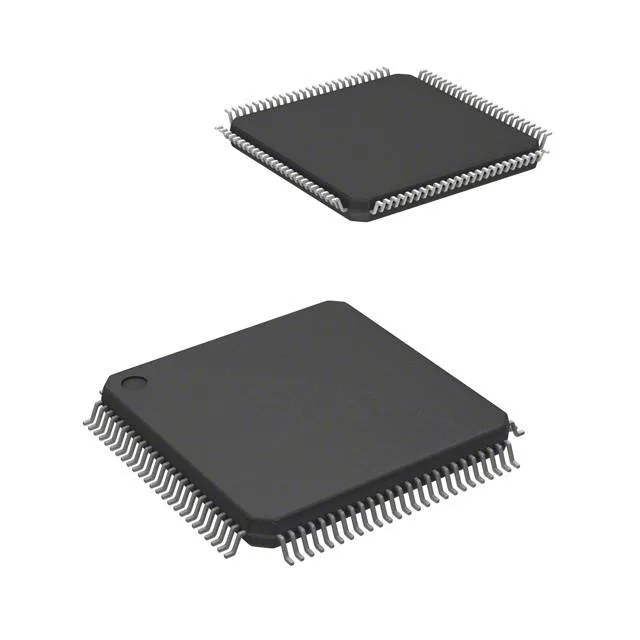
STMicroelectronics STM32F429VIT6 — Microcontrollers & Processors (MCU / MPU / DSP)

STM32F429VIT6 MCU, ARM Cortex-M4 180MHz, 2MB Flash, 100-LQFP

MPNSTM32F429VIT6
Active

STMicroelectronics STM32F4 series STM32F429VIT6, ARM Cortex-M4 32-Bit MCU, 180MHz, 2MB Flash, 256K x 8 RAM, CANbus/Ethernet/USB OTG, 82 I/O, 100-LQFP, -40°C to 85°C.

$18.0900Ref. price · indicative, final on quote
Packaging100-LQFP
RoHSROHS3 Compliant
SeriesSTM32F4
Independent supplier — new & surplus stockAuthenticity-screened · ESD-safe packingListing updated Aug 2026

Specifications

STM32F429VIT6 specifications
ParameterValue
SeriesSTM32F4
MountingSurface Mount
Oscillator typeInternal
Program memory typeFLASH
Voltage - supply (Vcc (Vdd))1.8V ~ 3.6V
Operating temperature-40°C ~ 85°C (TA)
Speed180MHz
PackageTray
RAM size256K x 8
Core size32-Bit Single-Core
PeripheralsBrown-out Detect/Reset, DMA, I²S, LCD, POR, PWM, WDT
ConnectivityCANbus, EBI/EMI, Ethernet, I²C, IrDA, LINbus, SPI, UART/USART, USB OTG
Number of i (O)82
Core processorARM® Cortex®-M4
Case100-LQFP
Data convertersA/D 16x12b; D/A 2x12b
Program memory size2MB (2M x 8)

Product details

This is the part you pick when you need a single-chip gateway controller — it handles the fieldbus, the HMI display, and the cloud uplink on one die.

Ethernet + CAN + LCD — peripheral set for industrial gateways

The integrated Ethernet MAC (with RMII/MII) and dual CAN 2.0B controllers let this MCU bridge an industrial CAN network to an IP backbone without a separate communication co-processor. The LCD parallel interface (up to 24-bit RGB) drives a TFT panel directly, saving a display controller. For sensor fusion or motor-control feedback, the 16-channel 12-bit ADC and the two 12-bit DACs cover analog I/O.

Package and temperature — 100-LQFP, industrial range

Frequently asked questions

What is the difference between STM32F429VIT6 and STM32F429ZIT6?

The difference is the package pin count: the VIT6 is in a 100-pin LQFP, while the ZIT6 is in a 144-pin LQFP. The 144-pin variant offers more I/O lines and additional peripheral pins, but both share the same core, memory, and feature set.