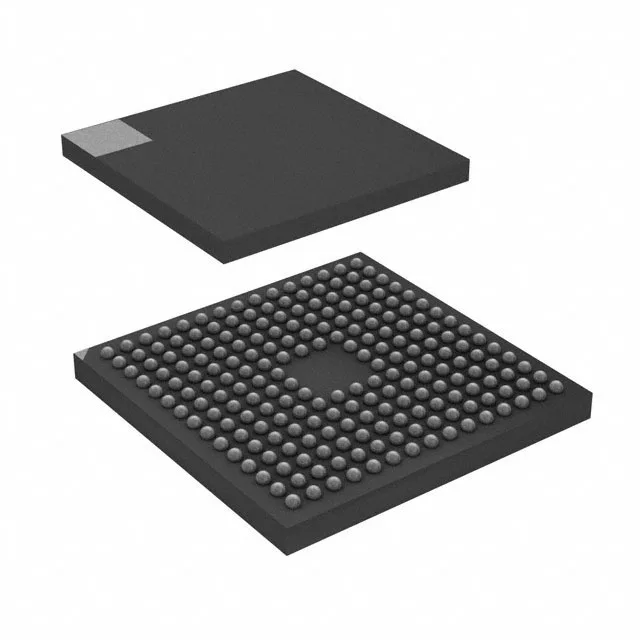
STMicroelectronics STM32F429NIH6U — Microcontrollers & Processors (MCU / MPU / DSP)

STM32F429NIH6U ARM Cortex-M4 MCU, 180 MHz, 2 MB Flash

MPNSTM32F429NIH6U
Active

STMicroelectronics STM32F429NIH6U, STM32F4 series, 32-bit ARM Cortex-M4 MCU, 180 MHz, 2 MB Flash, 256 KB RAM, Ethernet, CAN, USB OTG, LCD controller, 168 I/O, 216-TFBGA, -40°C to 85°C.

$15.0555Ref. price · indicative, final on quote
Independent supplier — new & surplus stockAuthenticity-screened · ESD-safe packingListing updated Jul 2026

Specifications

STM32F429NIH6U specifications
ParameterValue
SeriesSTM32F4
MountingSurface Mount
Oscillator typeInternal
Program memory typeFLASH
Voltage - supply (Vcc (Vdd))1.8V ~ 3.6V
Operating temperature-40°C~85°C(TA)
Speed180MHz
PackageTray
RAM size256K x 8
Core size32-Bit Single-Core
PeripheralsBrown-out Detect/Reset, DMA, I²S, LCD, POR, PWM, WDT
ConnectivityCANbus, EBI/EMI, Ethernet, I²C, IrDA, LINbus, SPI, UART/USART, USB OTG
Number of i (O)168
Core processorARM® Cortex®-M4
Case216-TFBGA
Data convertersA/D 24x12b; D/A 2x12b
Program memory size2MB (2M x 8)

Product details

180 MHz Cortex-M4 with 2 MB Flash — the display-and-connectivity workhorse

With 168 I/O lines in a 216-ball TFBGA package (13x13 mm body), it targets industrial HMIs, PLCs, motor drives with display panels, and networked control nodes that need a rich peripheral set in a compact BGA footprint.

Peripheral set — what the Ethernet, LCD, and CAN interfaces mean for your system architecture

The Ethernet MAC with dedicated DMA channels lets this MCU serve as a fieldbus gateway or IIoT edge node without an external network coprocessor. The LCD controller supports up to XGA resolution with an external frame buffer, though the 256 KB internal RAM limits on-chip buffering to smaller displays — for larger panels you budget an external SDRAM on the FMC bus. The 168 GPIO count in a 216-ball BGA means roughly 48 balls are power, ground, and reserved — plan for a 6-layer or 8-layer PCB to route the BGA escape and the parallel LCD/EMI buses cleanly.

It remains a current-production device suitable for new design starts and long-run production BOMs. The STM32F429 base part number spans multiple density and package variants. For BOM resilience, the LQFP176 and LQFP144 siblings share the same core and peripheral set but differ in I/O count and package footprint — a board redesign is required to swap between BGA and QFP. No pin-compatible second source from another manufacturer exists for this exact 216-TFBGA variant.

Frequently asked questions

Does STM32F429NIH6U have Ethernet?

Yes, the connectivity set includes an Ethernet MAC controller alongside CANbus, USB OTG, and multiple serial interfaces. This makes it a strong candidate for networked industrial and IoT edge applications.

What is the closest pin-compatible alternative to STM32F429NIH6U in this component family?

Within the STM32F429 series, the STM32F429ZIT6 (LQFP144) and STM32F429IIT6 (LQFP176) share the same core and peripheral set but use different package footprints and I/O counts. A direct BGA-to-BGA drop-in with identical ball map does not exist — any alternative requires a PCB layout change. For a higher-performance sibling, the STM32F439 series adds a hardware crypto accelerator but is otherwise pin-compatible in the same 216-TFBGA package.