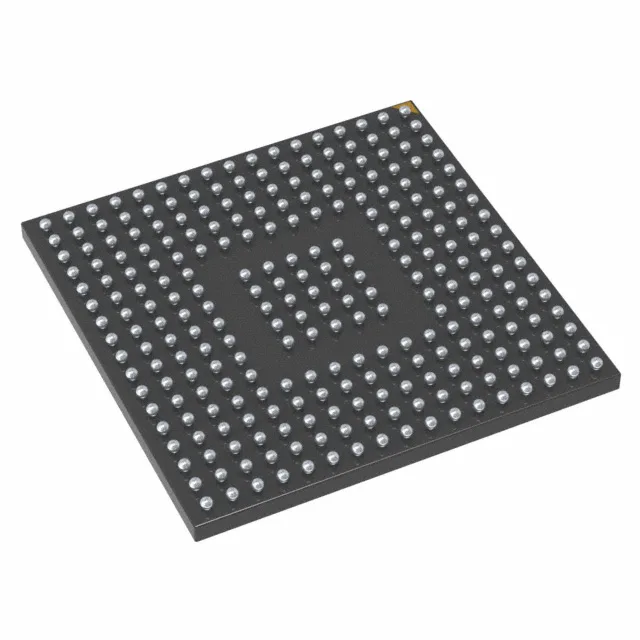
STMicroelectronics STM32F427IIH6 — Microcontrollers & Processors (MCU / MPU / DSP)

STM32F427IIH6 STM32F4 MCU, 180 MHz ARM Cortex-M4, 2 MB Flash

MPNSTM32F427IIH6
Active

STMicroelectronics STM32F4 series STM32F427IIH6, ARM Cortex-M4 32-Bit Single-Core MCU, 180 MHz, 2 MB Flash, 256K x 8 RAM, 140 I/O, 176+25UFBGA (10x10), -40°C to 85°C.

$19.4600Ref. price · indicative, final on quote
Packaging201-UFBGA
RoHSROHS3 Compliant
SeriesSTM32F4
Independent supplier — new & surplus stockAuthenticity-screened · ESD-safe packingListing updated Aug 2026

Specifications

STM32F427IIH6 specifications
ParameterValue
SeriesSTM32F4
MountingSurface Mount
Oscillator typeInternal
Program memory typeFLASH
Voltage - supply (Vcc (Vdd))1.8V ~ 3.6V
Operating temperature-40°C ~ 85°C (TA)
Speed180MHz
PackageTray
RAM size256K x 8
Core size32-Bit Single-Core
PeripheralsBrown-out Detect/Reset, DMA, I²S, POR, PWM, WDT
ConnectivityCANbus, EBI/EMI, Ethernet, I²C, IrDA, LINbus, SPI, UART/USART, USB OTG
Number of i (O)140
Core processorARM® Cortex®-M4
Case201-UFBGA
Data convertersA/D 24x12b; D/A 2x12b
Program memory size2MB (2M x 8)

Product details

180 MHz Cortex-M4 with 2 MB Flash — what this MCU delivers

The 140 I/O lines are mapped to a 176-ball UFBGA package (10x10 mm), which packs a high pin count into a compact footprint — useful for designs that need parallel bus interfaces (EBI/EMI), Ethernet, dual CAN, USB OTG, and multiple SPI/I²C/UART peripherals simultaneously.

Package and mounting — UFBGA rework considerations

The 176+25UFBGA (10x10 mm) is a fine-pitch ball-grid array. The package has no exposed thermal pad; heat dissipation relies on the PCB copper plane and via stitching under the BGA.

On-chip peripherals include DMA, PWM, WDT, I²S, and POR/Brown-out detect. The connectivity block covers CANbus, Ethernet, USB OTG, and an external memory interface (EBI/EMI) that can handle SRAM, NOR Flash, or NAND Flash. This peripheral mix suits applications like industrial PLCs, motor drives with encoder feedback, and IoT gateways that aggregate sensor data and push it over Ethernet or CAN.

Frequently asked questions

What is the difference between STM32F427IIH6 and STM32F429IIH6?

The key difference is the display controller: the STM32F429IIH6 adds a TFT LCD controller with a graphics accelerator, while the STM32F427IIH6 omits it. Both share the same 180 MHz Cortex-M4 core, 2 MB Flash, 256 KB SRAM, 176-ball UFBGA package, and peripheral set (Ethernet, CAN, USB OTG). If your design drives a parallel RGB display, the F429 is the fit; for headless or serial-interface displays, the F427 saves cost.

Can STM32F427IIH6 replace STM32F427VITx?

The STM32F427VITx is a 100-pin LQFP variant of the same die; the STM32F427IIH6 is a 176-ball UFBGA variant. The core, memory, and peripheral set are identical, but the pinout and package differ. A board redesign is required to swap between them — they are not drop-in compatible. The IIH6 offers more I/O (140 vs 82 on the VITx) and a smaller footprint.