100 MHz Cortex-M4 with 1 MB Flash — what the specs mean for the design
The 100 MHz core with DSP instructions and an FPU means this part handles FIR/IIR filter loops and floating-point math in hardware, not emulated in software. If your BOM needs a single MCU to run a control loop, manage a UI, and talk to a CAN bus, the clock speed and FPU save you a separate DSP or co-processor.
114 I/O and connectivity — peripheral integration for system-level designs
The EBI/EMI interface lets you attach external SRAM, NOR Flash, or an LCD controller directly to the memory bus without a glue FPGA. The 16-channel 12-bit ADC is sized for multi-sensor acquisition — three-phase current sensing plus a thermistor and a position encoder all on one chip, no external mux needed.
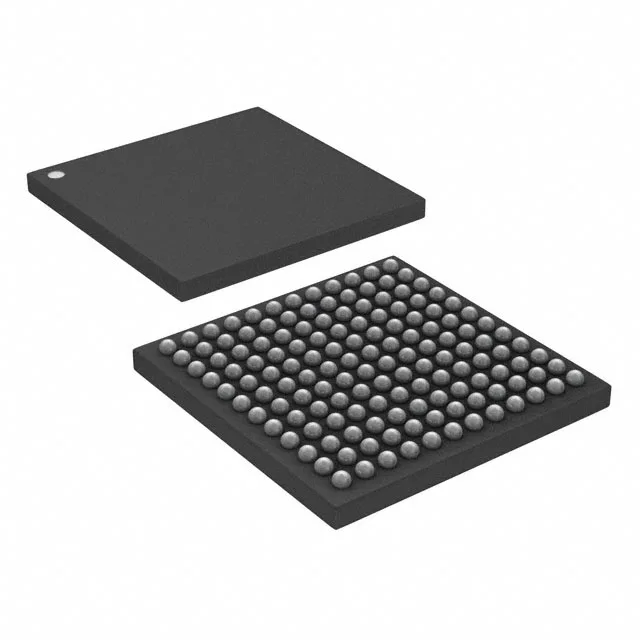
144-UFBGA package — layout and rework considerations
That is a dense, low-profile package suited for space-constrained PCBs, but it demands a controlled reflow profile and a clean solder paste stencil. From a rework standpoint, the UFBGA is reballable with practice — the 0.5 mm pitch means you need a fine-tip hot-air nozzle and good alignment optics. MSL 3 is typical for this package class — if the moisture-barrier bag has been open longer than the floor-life window, a bake at 125°C for 48 hours is required before reflow. The small ball diameter also means the pad design should follow the ST recommended land pattern exactly; a via-in-pad with tenting is common for routing out the inner rows.
That means no last-time-buy notice is in effect, and the part is still supported for new designs.