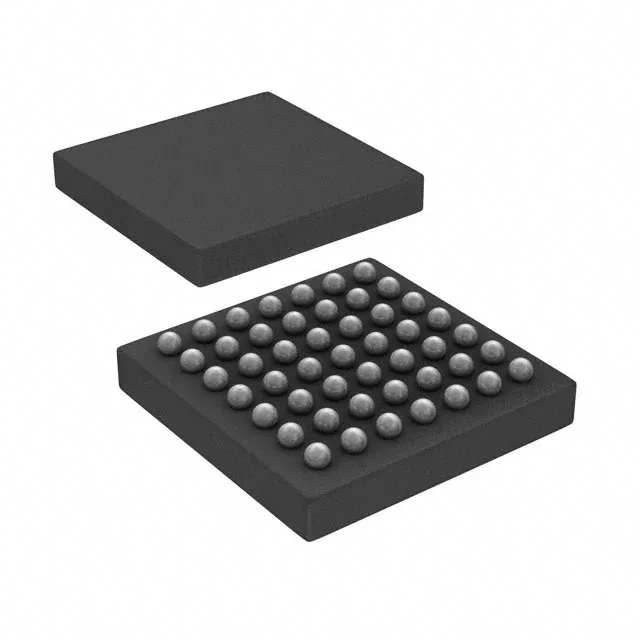
STMicroelectronics STM32F401CBY6TT — Microcontrollers & Processors (MCU / MPU / DSP)

STM32F401CBY6TT ARM Cortex-M4 MCU, 84 MHz, 128 KB Flash

MPNSTM32F401CBY6TT
Active

STMicroelectronics STM32F4 series, ARM Cortex-M4, 32-Bit Single-Core MCU, 84MHz, 128KB (128K x 8) FLASH, 64K x 8 RAM, 1.7V ~ 3.6V, 36 I/O, -40°C ~ 85°C, 49-UFBGA/WLCSP, Tray.

$6.0900Ref. price · indicative, final on quote
Independent supplier — new & surplus stockAuthenticity-screened · ESD-safe packingListing updated Jul 2026

Specifications

STM32F401CBY6TT specifications
ParameterValue
SeriesSTM32F4
MountingSurface Mount
Oscillator typeInternal
Program memory typeFLASH
Voltage - supply (Vcc (Vdd))1.7V ~ 3.6V
Operating temperature-40°C ~ 85°C (TA)
Speed84MHz
PackageTray
RAM size64K x 8
Core size32-Bit Single-Core
PeripheralsBrown-out Detect/Reset, DMA, I²S, POR, PWM, WDT
ConnectivityI²C, IrDA, LINbus, SDIO, SPI, UART/USART, USB OTG
Number of i (O)36
Core processorARM® Cortex®-M4
Case49-UFBGA, WLCSP
Data convertersA/D 10x12b
Program memory size128KB (128K x 8)

Product details

84 MHz Cortex-M4 in a wafer-level chip-scale package

The STM32F401CBY6TT is an STMicroelectronics STM32F4-series MCU built around an ARM Cortex-M4 core clocked at 84 MHz. The 49-ball WLCSP (0.4 mm pitch) saves board area for wearables, sensor nodes, and compact control modules, but demands controlled assembly — the wafer-level package is moisture-sensitive and requires a reflow profile matched to the 0.4 mm ball pitch.

Peripheral set and I/O budget

The 10-channel 12-bit ADC (A/D 10x12b) covers analog inputs for battery monitoring, knob position, or ambient-light sensing. On-chip peripherals include DMA, PWM timers, a watchdog, brown-out reset, and POR — enough to run a modest RTOS or bare-metal control loop without external supervisory ICs.

It is not rated for under-hood or downhole environments — those call for the -40 to 125 °C extended-range siblings in the STM32F4 family. The internal oscillator trims the BOM by one crystal, though an external clock source improves timing accuracy for USB or CAN operation.

STMicroelectronics lists the STM32F401CBY6TT as Active. No last-time-buy or phase-out notice is in effect. For dual-sourcing resilience, the STM32F401 series includes pin-compatible density variants (e.g., 256 KB Flash / 64 KB RAM) in the same WLCSP-49 footprint — a BOM-level swap without board respin.

Frequently asked questions

What is the maximum speed of STM32F401CBY6TT?

The STM32F401CBY6TT runs at up to 84 MHz from the internal PLL. At this speed, the Cortex-M4 delivers roughly 105 DMIPS, enough for real-time control loops, audio DSP, or protocol stacks like USB and TCP/IP offload. Flash wait states need configuring above 48 MHz — the reference manual details the latency settings.

How much RAM does STM32F401CBY6TT have?

64 KB of SRAM (organized as 64K x 8). That is a moderate pool — enough for a FreeRTOS heap, a few 1 KB communication buffers, and a 16 KB stack, but tight for a full GUI framebuffer or large audio sample arrays. If your application needs more than 48 KB of runtime data, consider the STM32F401RE (96 KB RAM) or step up to the STM32F405.

Does STM32F401CBY6TT have USB OTG?

Yes, USB OTG (On-The-Go) is part of the connectivity set. It can act as host, peripheral, or negotiate roles — useful for connecting a USB flash drive, keyboard, or smartphone to the embedded system without an external host controller. The PHY is integrated, so only a USB connector and a few passives are needed on the board.

What is the difference between STM32F401CBY6TT and STM32F401CBY6TR?

The only difference is the shipping medium: 'TT' suffix denotes Tray packaging, while 'TR' indicates Tape & Reel. The silicon, package, and electrical specifications are identical. Choose TT for hand-assembly or low-volume kitting; choose TR for automated pick-and-place lines.