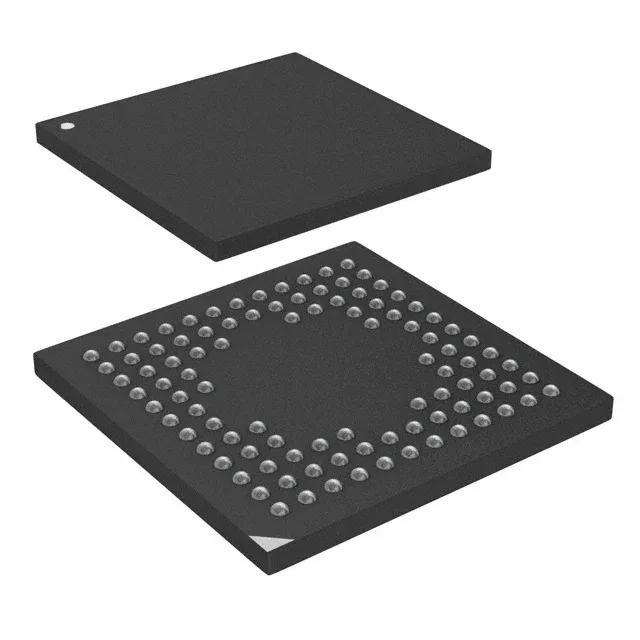
72 MHz Cortex-M4 with rich analog — what the BGA footprint means for the board
The 100-UFBGA (7x7 mm) package puts 84 I/O and the full peripheral set into a compact footprint, but the BGA requires a controlled reflow profile, X-ray inspection for voiding, and careful fan-out on the inner rows — not a hand-solder part.
Analog integration that saves external components
For a motor-drive design that reads three phase currents plus a DC-link voltage, the ADC count covers it with margin. The DACs can serve as setpoint references or waveform generators. This integration shrinks the BOM and board area, but the 12-bit resolution means you still need an external precision reference if the system demands better than 0.1% accuracy.
Connectivity and peripheral set for industrial control
For a fieldbus node or a sensor hub, the CAN and UART ports handle the backbone, while the I²S can drive a codec for audio feedback or voice alerts.
For dual-sourcing resilience, the STM32F303VET6 (same package, same Flash/RAM, LQFP100 instead of BGA) is a pin-compatible alternative if your board can accommodate the larger QFP footprint.