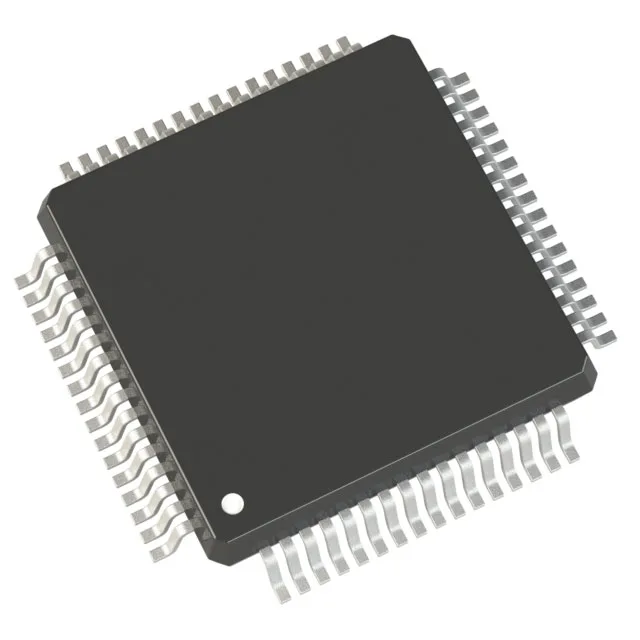
STMicroelectronics STM32F303R8T6 — Microcontrollers & Processors (MCU / MPU / DSP)

STM32F303R8T6 ARM Cortex-M4 MCU, 72MHz, 64KB Flash, 64-LQFP

MPNSTM32F303R8T6
Active

STMicroelectronics STM32F3 series, ARM Cortex-M4 32-bit MCU, 72MHz, 64KB (64K x 8) FLASH, 16K x 8 RAM, CANbus, I²C, IrDA, LINbus, SPI, UART/USART, 51 I/O, 64-LQFP, -40°C ~ 85°C.

$6.5400Ref. price · indicative, final on quote
Packaging64-LQFP
RoHSROHS3 Compliant
SeriesSTM32F3
Independent supplier — new & surplus stockAuthenticity-screened · ESD-safe packingListing updated Aug 2026

Specifications

STM32F303R8T6 specifications
ParameterValue
SeriesSTM32F3
MountingSurface Mount
Oscillator typeInternal
Program memory typeFLASH
Voltage - supply (Vcc (Vdd))2V ~ 3.6V
Operating temperature-40°C ~ 85°C (TA)
Speed72MHz
PackageTray
RAM size16K x 8
Core size32-Bit Single-Core
PeripheralsDMA, I²S, POR, PWM, WDT
ConnectivityCANbus, I²C, IrDA, LINbus, SPI, UART/USART
Number of i (O)51
Core processorARM® Cortex®-M4
Case64-LQFP
Data convertersA/D 15x12b; D/A 1x12b
Program memory size64KB (64K x 8)

Product details

The STM32F303R8T6: ARM Cortex-M4 core runs at 72 MHz with hardware floating-point. 51 I/O lines in a 64-LQFP package.

15-channel ADC and one DAC — analog front-end integration

Fifteen analog inputs are enough to read three-phase currents plus a handful of voltage and temperature sensors without an external mux. The single DAC can serve as a reference or an analog setpoint. If your design needs more than one analog output channel, you will need an external DAC or a different STM32F3 variant.

Connectivity and peripherals for fieldbus and sensor networks

The built-in DMA, I²S, POR, PWM, and WDT peripherals cover the common control and audio-interface needs without external glue logic.

Package and footprint — 64-LQFP, hand-solderable

Housed in a 64-LQFP with a 10x10 mm body and 0.5 mm pitch, this is a hand-solderable package — no hot-air station required for rework. The exposed pad (if present on the LQFP variant) needs a via stitch under the package for thermal relief if you push the I/O current. Surface-mount only; no socket option unless you add a production socket.

Frequently asked questions

What is the difference between STM32F303R8T6 and STM32F303C8T6?

The key difference is the package and pin count. The R8T6 comes in a 64-LQFP with 51 I/O, while the C8T6 is a 48-LQFP with fewer I/O. The core, memory (64 KB Flash, 16 KB SRAM), and peripheral set are the same. Choose the R8T6 if you need the extra I/O or analog channels; the C8T6 saves board space for simpler designs.

Can STM32F303R8T6 run at 72 MHz?

Yes, the listed maximum clock speed is 72 MHz. The ARM Cortex-M4 core with FPU runs at that frequency with appropriate flash wait states configured in the clock tree during firmware initialization.

What is the maximum clock speed of STM32F303R8T6?

The maximum clock speed is 72 MHz, as specified for the STM32F303 series. This is the core clock; peripheral clocks may be divided down from that rate.