It runs at 72 MHz with a single-cycle multiply and hardware divide, plus a floating-point unit — useful for motor-control loops, sensor fusion, or audio processing without an external DSP. On the analog side you get eleven 12-bit ADC channels and a single 12-bit DAC — enough to sample multiple thermistors, current-sense resistors, or potentiometers and output a control voltage without extra silicon.
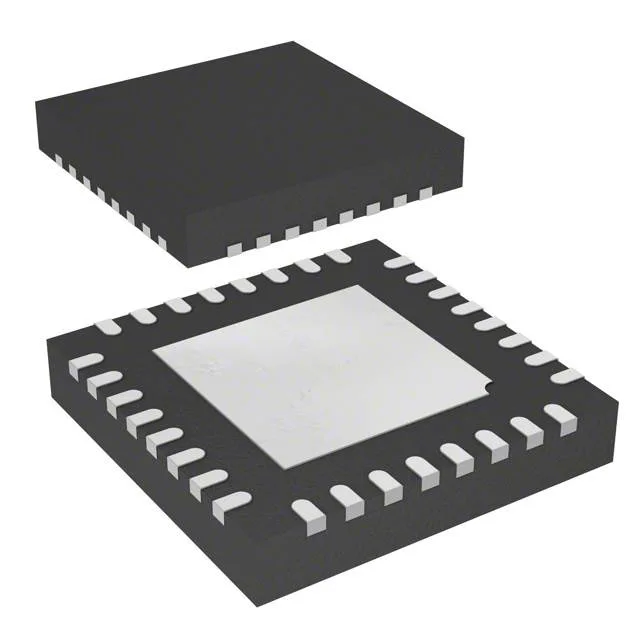
The STM32F301K8U6TR comes in a 32-lead UFQFPN (5x5 mm) with an exposed thermal pad. That pad needs a via stitch under the part to pull heat into the board ground plane — without it, the junction temperature climbs fast above 200 mA continuous I/O load. The package is leadless, so rework takes hot air; a standard soldering iron won't reach the center pad. If you are doing field repairs, budget for a hot-air station and a stencil or preform for the pad.
Active lifecycle — no EOL worry for new designs
The ROHS3 compliance means it passes the latest lead-free and halogen-free directives — no exemption paperwork needed for EU or California markets.
What the 72 MHz Cortex-M4 means for your BOM
The headline 72 MHz core speed with FPU is the main reason to pick this over an STM32F1 or STM32L1 part. The STM32L151CBU6A, for comparison, runs a Cortex-M3 at 32 MHz with no FPU — fine for low-power sensor nodes, but it lacks the math throughput for real-time motor FOC or audio filtering. If your algorithm needs a multiply-accumulate every microsecond, the STM32F301K8U6TR is the right tier.
The STM32F301K8U6TR is an active, widely stocked STM32F3 variant. Submit an RFQ for the quantity you need and we will source it against your BOM line — no minimums, no commitment to a full reel.