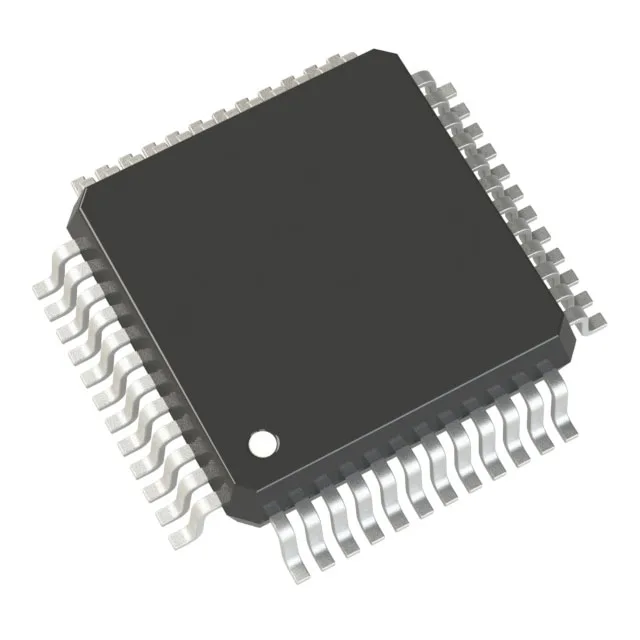
STMicroelectronics STM32F301C6T7 — Microcontrollers & Processors (MCU / MPU / DSP)

ST STM32F301C6T7 ARM Cortex-M4 MCU, 72 MHz, 32 KB Flash

MPNSTM32F301C6T7
Active

STMicroelectronics STM32F3 series, ARM Cortex-M4 MCU, 32-bit, 72 MHz, 32 KB Flash, 16K x 8 RAM, 37 I/O, 48-LQFP, -40 to 105 °C.

$3.1529Ref. price · indicative, final on quote
Independent supplier — new & surplus stockAuthenticity-screened · ESD-safe packingListing updated Jul 2026

Specifications

STM32F301C6T7 specifications
ParameterValue
SeriesSTM32F3
MountingSurface Mount
Oscillator typeInternal
Program memory typeFLASH
Voltage - supply (Vcc (Vdd))2V ~ 3.6V
Operating temperature-40°C ~ 105°C (TA)
Speed72MHz
PackageTray
RAM size16K x 8
Core size32-Bit Single-Core
PeripheralsDMA, I²S, POR, PWM, WDT
ConnectivityI²C, IrDA, LINbus, SPI, UART/USART
Number of i (O)37
Core processorARM® Cortex®-M4
Case48-LQFP
Data convertersA/D 8x12b; D/A 1x12b
Program memory size32KB (32K x 8)

Product details

The STM32F301C6T7 is a 32-bit ARM Cortex-M4 MCU from ST's STM32F3 series, clocked at 72 MHz with a single-cycle multiply-and-accumulate and a hardware FPU. That FPU is the reason to pick this part over an M3 or M0+ at the same speed — it handles floating-point PID coefficients or sensor fusion trig without a software library eating cycles.

Industrial temperature range and on-chip peripherals

Internal oscillator saves a crystal for UART and I²C. On-chip DMA, I²S, POR, PWM, WDT. Supply range is 2 V to 3.6 V.

Sourcing and RFQ posture

Frequently asked questions

What is the operating voltage range of STM32F301C6T7?

The supply voltage range is 2 V to 3.6 V, allowing operation from a single 3.3 V rail or a near-depleted Li-ion cell with a 2 V dropout regulator.

What is the closest pin-compatible alternative to STM32F301C6T7?

Within the STM32F3 family, a higher-density sibling such as STM32F303C6T7 or STM32F303C8T7 shares the same 48-LQFP footprint and peripheral set. Verify ADC and timer differences in the reference manual before substituting.