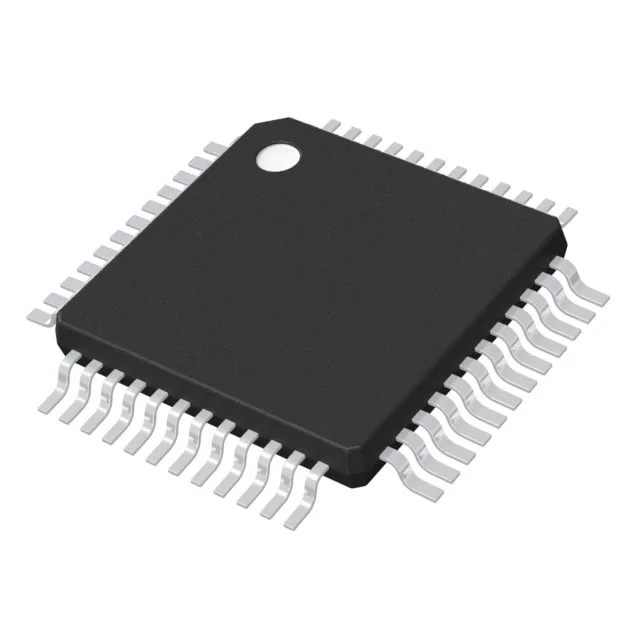
STMicroelectronics STM32F301C6T6 — Microcontrollers & Processors (MCU / MPU / DSP)

STM32F301C6T6 ARM Cortex-M4 MCU, 72 MHz, 32 KB Flash

MPNSTM32F301C6T6
Active

STMicroelectronics STM32F301C6T6, ARM Cortex-M4 32-bit MCU, 72 MHz, 32 KB Flash, 16 KB SRAM, 37 I/O, 2V-3.6V, -40°C to 85°C, 48-LQFP (7x7 mm).

$5.3100Ref. price · indicative, final on quote
Independent supplier — new & surplus stockAuthenticity-screened · ESD-safe packingListing updated Jul 2026

Specifications

STM32F301C6T6 specifications
ParameterValue
SeriesSTM32F3
MountingSurface Mount
Oscillator typeInternal
Program memory typeFLASH
Voltage - supply (Vcc (Vdd))2V ~ 3.6V
Operating temperature-40°C ~ 85°C (TA)
Speed72MHz
PackageTray
RAM size16K x 8
Core size32-Bit Single-Core
PeripheralsDMA, I2S, POR, PWM, WDT
ConnectivityI2C, IrDA, LINbus, SPI, UART/USART
Number of i (O)37
Core processorARM® Cortex®-M4
Case48-LQFP
Data convertersA/D 8x12b; D/A 1x12b
Program memory size32KB (32K x 8)

Product details

72 MHz Cortex-M4 with FPU — what it buys you

The Cortex-M4 core includes a single-precision floating-point unit (FPU) and DSP instructions, so control loops that would otherwise eat soft-FPU cycles on a Cortex-M3 run in hardware here — think motor-current PID, sensor fusion, or digital-filter stages in a mixed-signal environment.

Memory sizing for the BOM tier

The 16 KB SRAM, organised as 16K x 8, handles a couple of moderate DMA buffers alongside the stack and heap. If your firmware footprint is already pushing 28 KB, look at the 64 KB Flash variants in the same 48-LQFP footprint.

The 37 I/O lines in the 48-LQFP package give reasonable headroom for a mixed analog/digital design; eight 12-bit ADC channels and one 12-bit DAC are integrated for direct sensor or actuator interfacing.

Frequently asked questions

What is the closest pin-compatible alternative to STM32F301C6T6?

Within the STM32F3 series, the STM32F303C6T6 and STM32F303C8T6 share the same 48-LQFP footprint and pinout. The STM32F303 variants add a second 12-bit ADC and a few more timer channels, but the core, memory map, and peripheral base addresses are compatible. Check the STM32F3 reference manual for the exact register differences before swapping.