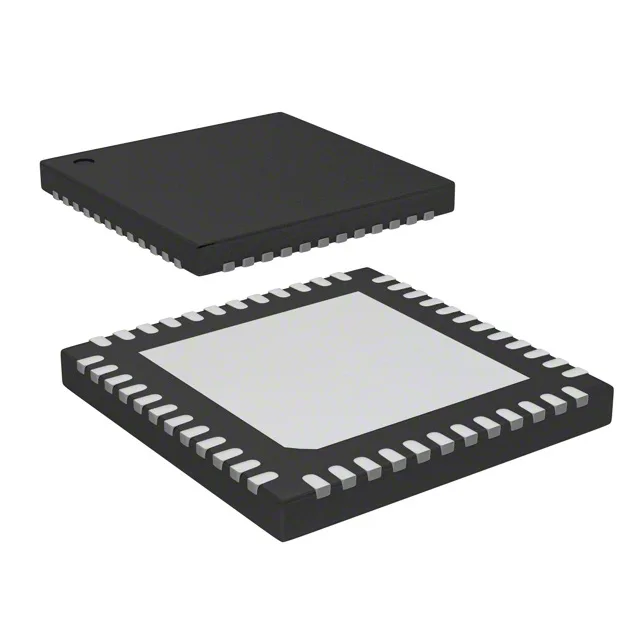
72 MHz Cortex-M3 in a compact 48-UFQFN — what this MCU covers
The STM32F103C6U6A: The 48-UFQFN package with exposed pad saves board area versus a 48-LQFP, but the pad needs a solid thermal via array under the die to keep junction temperature in check when the I/O bank is fully loaded.
Memory sizing and peripheral set — what fits and what doesn't
With 32 KB of Flash you are looking at a firmware image under about 28 KB after the bootloader and vector table. That rules out full-featured USB stacks with multiple endpoints or a heavy GUI library. The 10 KB SRAM is tight for a TCP/IP stack — a lightweight CANopen or Modbus RTU implementation fits, but you will need to watch the stack and buffer allocation.
It is not AEC-Q100 qualified, so for under-hood automotive you would step up to the STM32F103C8T6 or the automotive-grade STM32F1 derivatives.
STMicroelectronics lists the STM32F103C6U6A as Active. The STM32F1 series is a mature, high-volume platform, so supply through independent distribution is consistent. For dual-sourcing resilience, the pin-compatible STM32F103C8T6 (64 KB Flash, 20 KB SRAM) in 48-LQFP is a drop-in alternative if the board can accommodate the larger package.
Sourcing posture
The active lifecycle means there is no allocation risk from an impending EOL, and the high-volume STM32F1 platform keeps the part in regular production.