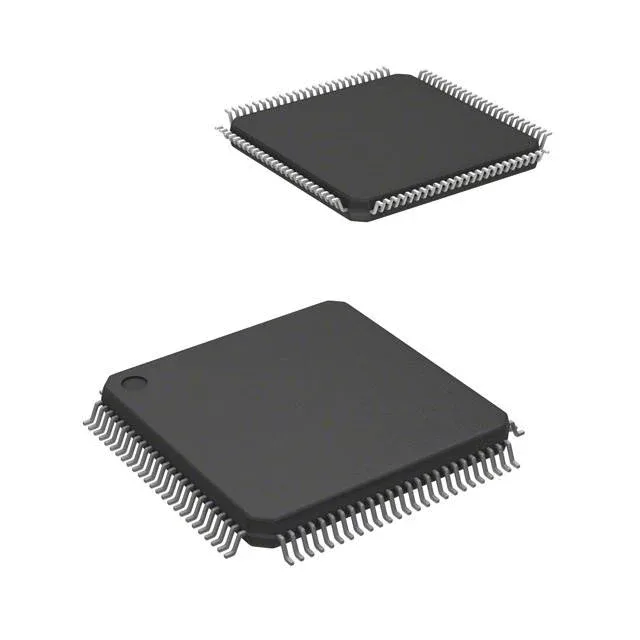
STMicroelectronics STM32F101VBT6TR — Microcontrollers & Processors (MCU / MPU / DSP)

ST STM32F101VBT6TR ARM Cortex-M3 MCU, 36 MHz, 128 KB Flash

MPNSTM32F101VBT6TR
Active

STMicroelectronics STM32F101VBT6TR, STM32F1 series, 32-bit ARM Cortex-M3 MCU, 36 MHz, 128 KB Flash, 16K x 8 RAM, 80 I/O, 100-LQFP, -40°C to 85°C.

$4.4562Ref. price · indicative, final on quote
Independent supplier — new & surplus stockAuthenticity-screened · ESD-safe packingListing updated Jul 2026

Specifications

STM32F101VBT6TR specifications
ParameterValue
SeriesSTM32F1
MountingSurface Mount
Oscillator typeInternal
Program memory typeFLASH
Voltage - supply (Vcc (Vdd))2V ~ 3.6V
Operating temperature-40°C~85°C(TA)
Speed36MHz
PackageTape & Reel (TR)
RAM size16K x 8
Core size32-Bit Single-Core
PeripheralsDMA, PDR, POR, PVD, PWM, Temp Sensor, WDT
ConnectivityI²C, IrDA, LINbus, SPI, UART/USART
Number of i (O)80
Core processorARM® Cortex®-M3
Case100-LQFP
Data convertersA/D 16x12b
Program memory size128KB (128K x 8)

Product details

Cost-optimized Cortex-M3 with 36 MHz ceiling

It targets applications where the full 72 MHz of the STM32F103 is not needed — think motor control, sensor hubs, and industrial I/O modules that run on a leaner clock budget. The 80 I/O in the 100-LQFP package gives enough pins to handle parallel displays or multiple SPI/UART peripherals without a port expander.

On-chip peripherals include DMA, PDR, POR, PVD, PWM, a temperature sensor, and a watchdog timer. The 16-channel 12-bit ADC handles analog inputs like thermistors or current shunts without an external converter.

The tape-and-reel suffix (TR) matches automated pick-and-place lines.

The active lifecycle means no supply discontinuity risk from a pending phase-out, but as with any Cortex-M3 device, verify date-code freshness against the manufacturer's PCN calendar — older reels may carry a different wafer revision.

Frequently asked questions

Is STM32F101VBT6TR compatible with STM32F103?

The STM32F101VBT6TR is pin-compatible with the STM32F103 in the same package, but the F103 runs at 72 MHz and includes a second USB/UART peripheral. The F101 lacks the USB interface and has a lower clock ceiling, so a firmware port is needed if switching between the two.