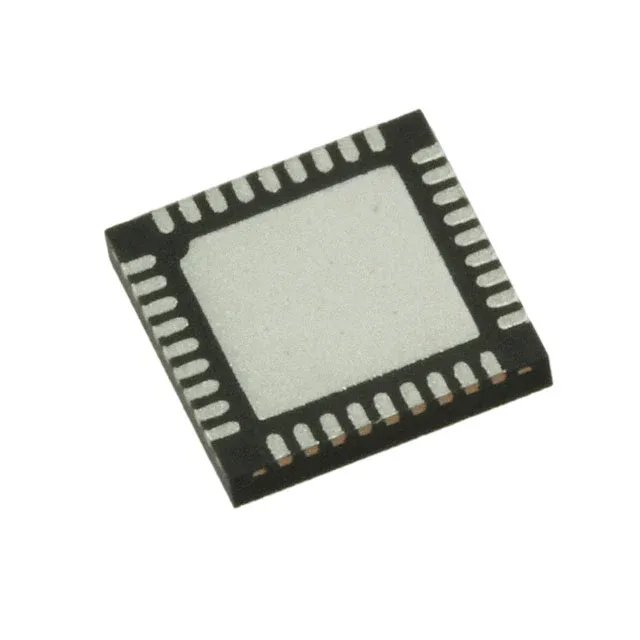
STMicroelectronics STM32F101T8U6 — Microcontrollers & Processors (MCU / MPU / DSP)

ST STM32F101T8U6 ARM Cortex-M3 MCU, 36 MHz, 64 KB Flash

MPNSTM32F101T8U6
Active

STMicroelectronics STM32F101T8U6, 32-Bit Single-Core ARM Cortex-M3 MCU, 36MHz, 64KB Flash, 10K x 8 RAM, 36-VFQFN Exposed Pad, -40°C to 85°C.

$5.9500Ref. price · indicative, final on quote
Packaging36-VFQFN Exposed Pad
RoHSROHS3 Compliant
SeriesSTM32F1
Independent supplier — new & surplus stockAuthenticity-screened · ESD-safe packingListing updated Aug 2026

Specifications

STM32F101T8U6 specifications
ParameterValue
SeriesSTM32F1
MountingSurface Mount
Oscillator typeInternal
Program memory typeFLASH
Voltage - supply (Vcc (Vdd))2V ~ 3.6V
Operating temperature-40°C ~ 85°C (TA)
Speed36MHz
PackageTray
RAM size10K x 8
Core size32-Bit Single-Core
PeripheralsDMA, PDR, POR, PVD, PWM, Temp Sensor, WDT
ConnectivityI²C, IrDA, LINbus, SPI, UART/USART
Number of i (O)26
Core processorARM® Cortex®-M3
Case36-VFQFN Exposed Pad
Data convertersA/D 10x12b
Program memory size64KB (64K x 8)

Product details

STM32F101T8U6 — value-line Cortex-M3 for cost-sensitive control

It belongs to the STM32F1 value line, optimized for applications where peripheral count and memory density are secondary to unit cost. The 26 I/O pins and a 10-channel 12-bit ADC serve sensor interface and basic control loops in industrial automation, building management, and low-end motor drives.

36 MHz and 64 KB Flash — what the memory and speed budget means

The 36 MHz core clock is roughly half the speed of the STM32F103 siblings, which means the F101T8U6 is a deliberate cost-reduced choice: it handles UART polling loops, 1 kHz control loops, and moderate protocol stacks, but it will not run heavy DSP or high-rate ADC sampling without careful scheduling.

For new designs, the STM32F1 value line remains a safe choice from a supply continuity standpoint, though the STM32G0 series offers a more modern architecture at comparable cost for greenfield projects.

36-VFQFN exposed-pad — thermal and soldering notes

The pad also serves as the ground return; a missing via stitch under the pad can cause the junction temperature to rise faster than expected when running continuous ADC conversions or driving multiple I/O pins.

Frequently asked questions

What is the difference between STM32F101T8U6 and STM32F103T8U6?

The STM32F103T8U6 runs at 72 MHz (double the 36 MHz of the F101) and includes a second 12-bit ADC, a USB 2.0 full-speed interface, and a CAN 2.0B controller — all absent on the F101. The F101 is the cost-optimized value line; the F103 is the performance line. Both share the same Cortex-M3 core, 64 KB Flash, 10 KB SRAM, and 36-VFQFN footprint, so a board designed for one can often accept the other with firmware changes.