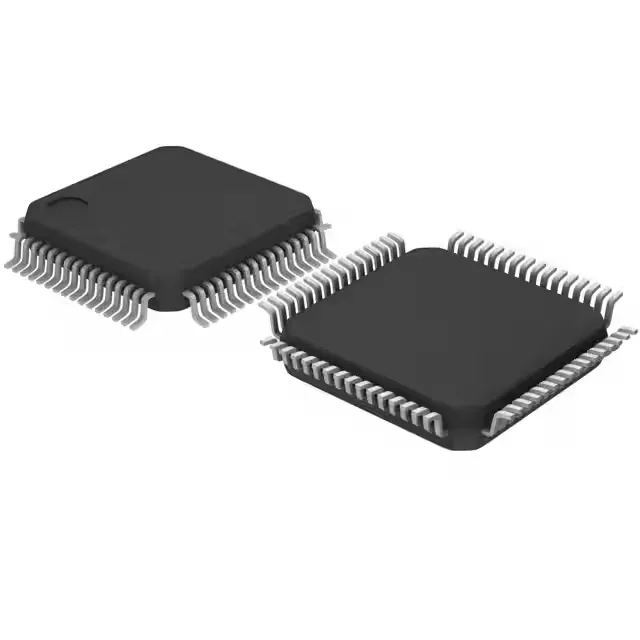
36 MHz Cortex-M3 — the cost-optimised workhorse
The STM32F101RET6TR is an STMicroelectronics ARM Cortex-M3 microcontroller running at a 36 MHz core clock — half the speed of the STM32F103 sibling, which is the main trade-off that keeps the BOM cost down for applications that don't need the full 72 MHz throughput. It packs 512 KB of Flash and 48 KB of SRAM, enough for a moderate control stack with a communication protocol layer, and the 64-pin LQFP gives you 51 GPIOs to play with.
What the 36 MHz ceiling means for your design
At 36 MHz the core executes one instruction per cycle for most ARM Thumb-2 operations, so you get roughly 36 MIPS. That's enough to run a Modbus RTU stack, poll a handful of sensors, and update a local display without breaking a sweat. But if your application needs real-time FFT, high-speed motor control loops, or a TCP/IP stack with encryption, the 72 MHz STM32F103 is the better fit — same pinout, same peripherals, just a faster clock and a second ADC. The 512 KB Flash is generous for this class; you can fit a full bootloader, application code, and a small file system for logging without worrying about the next spin.
Peripheral set and integration
For dual-sourcing resilience, the pin-compatible STM32F103RET6TR is the obvious second source — same Flash and SRAM, same package, just the faster core and a second ADC.