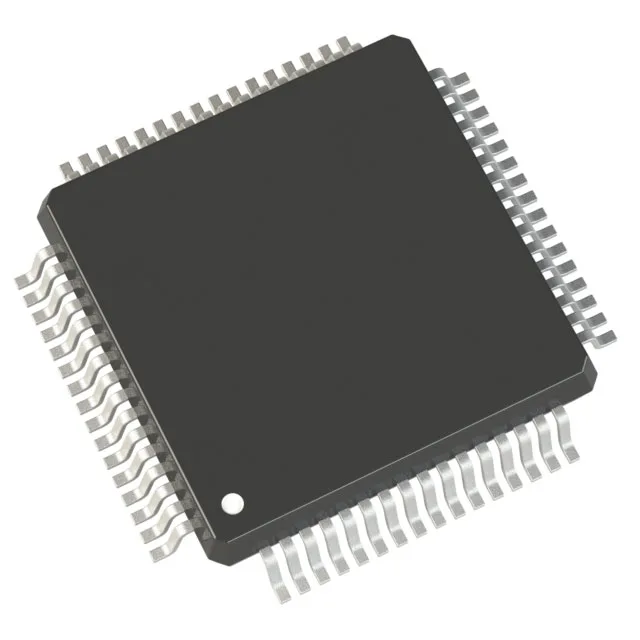
STMicroelectronics STM32F101RDT6 — Microcontrollers & Processors (MCU / MPU / DSP)

STM32F101RDT6 STM32F1 MCU, 36 MHz, 384 KB Flash, 64-LQFP

MPNSTM32F101RDT6
Active

STMicroelectronics STM32F1 series, STM32F101RDT6, ARM Cortex-M3 32-bit MCU, 36 MHz, 384 KB Flash, 48 KB RAM, 51 I/O, 64-LQFP (10x10 mm), -40 to 85 °C.

$8.6100Ref. price · indicative, final on quote
Packaging64-LQFP
RoHSROHS3 Compliant
SeriesSTM32F1
Independent supplier — new & surplus stockAuthenticity-screened · ESD-safe packingListing updated Aug 2026

Specifications

STM32F101RDT6 specifications
ParameterValue
SeriesSTM32F1
MountingSurface Mount
Oscillator typeInternal
Program memory typeFLASH
Voltage - supply (Vcc (Vdd))2V ~ 3.6V
Operating temperature-40°C ~ 85°C (TA)
Speed36MHz
PackageTray
RAM size48K x 8
Core size32-Bit Single-Core
PeripheralsDMA, PDR, POR, PVD, PWM, Temp Sensor, WDT
ConnectivityI²C, IrDA, LINbus, SPI, UART/USART
Number of i (O)51
Core processorARM® Cortex®-M3
Case64-LQFP
Data convertersA/D 16x12b; D/A 2x12b
Program memory size384KB (384K x 8)

Product details

Core and memory sizing for control-loop duty

The STM32F101RDT6 runs an ARM Cortex-M3 core at 36 MHz — enough throughput for a single RTOS with sensor fusion or a Modbus gateway, but not for real-time audio or fast FFT workloads. The 384 KB flash and 48 KB RAM support a moderate application stack with a lightweight TCP/IP library, though the RAM ceiling limits large data buffers.

Peripheral set for field I/O and communication

The on-chip peripherals cover common industrial and instrumentation needs: DMA for memory-to-peripheral transfers without CPU load, PWM for motor or LED dimming, and a temperature sensor for die-temperature monitoring. The 16-channel 12-bit ADC and dual 12-bit DAC handle basic analog front-end tasks without external converters.

Frequently asked questions

What is the closest pin-compatible alternative within the STM32F1 family?

The STM32F103 series shares the same 64-LQFP footprint and pinout for many variants, but adds a full-speed USB 2.0 peripheral and higher clock speeds — verify the specific order code against the target BOM position before substituting, as peripheral and memory differences may affect firmware compatibility.