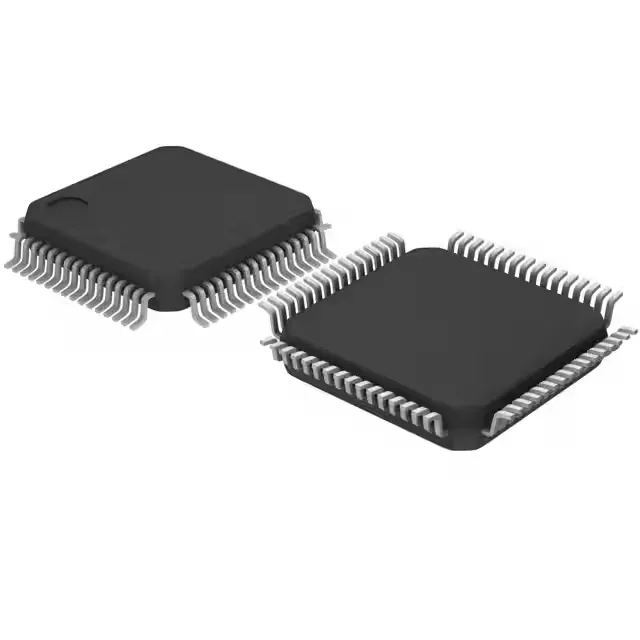
STMicroelectronics STM32F101R6T6ATR — Microcontrollers & Processors (MCU / MPU / DSP)

STM32F101R6T6ATR STM32F1 ARM Cortex-M3 MCU, 36 MHz

MPNSTM32F101R6T6ATR
Active

STMicroelectronics STM32F1 series, STM32F101R6T6ATR, 32-bit ARM Cortex-M3 MCU, 36 MHz, 32 KB Flash, 6K x 8 RAM, DMA, PWM, 51 I/O, I²C/SPI/UART, 64-LQFP, -40°C to 85°C.

$3.2739Ref. price · indicative, final on quote
Independent supplier — new & surplus stockAuthenticity-screened · ESD-safe packingListing updated Jul 2026

Specifications

STM32F101R6T6ATR specifications
ParameterValue
SeriesSTM32F1
MountingSurface Mount
Oscillator typeInternal
Program memory typeFLASH
Voltage - supply (Vcc (Vdd))2V ~ 3.6V
Operating temperature-40°C~85°C(TA)
Speed36MHz
PackageTape & Reel (TR)
RAM size6K x 8
Core size32-Bit Single-Core
PeripheralsDMA, PDR, POR, PVD, PWM, Temp Sensor, WDT
ConnectivityI²C, IrDA, LINbus, SPI, UART/USART
Number of i (O)51
Core processorARM® Cortex®-M3
Case64-LQFP
Data convertersA/D 16x12b
Program memory size32KB (32K x 8)

Product details

Value-line Cortex-M3 for cost-sensitive control

It targets applications where peripheral count matters more than raw throughput — think motor control, sensor hubs, and industrial I/O nodes that don't need the full 72 MHz of the STM32F103.

The 36 MHz core speed is half the STM32F103's ceiling, which cuts the per-unit cost noticeably at volume. For a UART-polled sensor aggregator or a PWM-driven fan controller, 36 MHz is plenty — you save the delta and still get the Cortex-M3 pipeline advantage over an 8-bit part. Just confirm your interrupt latency budget and any tight loop (bit-banged SPI, for example) fits within the 27.8 ns instruction cycle. The internal oscillator trims to 1% accuracy, so you can skip the external crystal for many designs.

32 KB Flash — sizing the firmware envelope

With 32 KB of program Flash, this part lives in the small-code regime — bootloader plus one or two application tasks. If your firmware includes a full RTOS, USB stack, or a graphics library, you'll overflow quickly. For a dedicated function like a CAN-to-UART gateway or a simple PID loop, 32 KB is comfortable. The 6K x 8 SRAM handles moderate data buffers; plan for stack and heap overhead early in the porting phase.

Lifecycle — still active, no LTB pressure

For a storeroom or MRO buyer, this means you can plan multi-year support without scrambling for a drop-in replacement.

Peripherals and connectivity for industrial I/O

The peripheral set includes DMA, POR, PDR, PVD, PWM, a temperature sensor, and a watchdog timer — enough for standalone control without an external supervisor. The 16-channel 12-bit ADC samples at up to 1 µs per channel, adequate for current-sense or thermistor readout in a motor drive.

Frequently asked questions

What is the difference between STM32F101R6T6ATR and STM32F101R6T6A?

The suffix 'TR' on STM32F101R6T6ATR indicates Tape & Reel packaging for automated pick-and-place assembly. The STM32F101R6T6A (without 'TR') typically ships in tray or tube format. The silicon and all electrical specifications are identical.

Can I substitute STM32F101R6T6ATR with a more common STM32F103 part?

The STM32F103 series runs at 72 MHz (double the 36 MHz of this part) and includes a second 12-bit ADC plus USB and CAN on many variants. The STM32F103 is pin-compatible in the same 64-LQFP footprint, but the peripheral set and clock tree differ — a firmware port is required. For a direct drop-in without code changes, stay with the STM32F101 family.

What is the flash size of STM32F101R6T6ATR?

The program memory is 32 KB of Flash, organized as 32K x 8 bits.