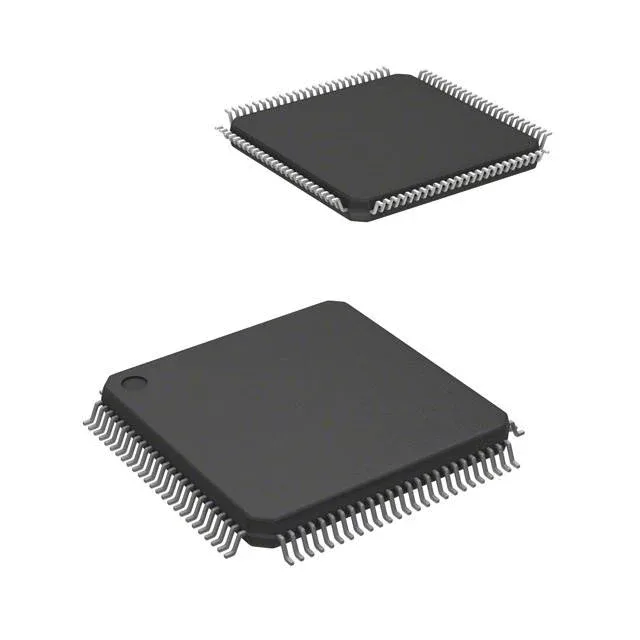
STMicroelectronics STM32F100V8T7B — Microcontrollers & Processors (MCU / MPU / DSP)

ST STM32F100V8T7B ARM Cortex-M3 MCU, 24 MHz, 64 KB Flash

MPNSTM32F100V8T7B
Active

STMicroelectronics STM32F100V8T7B, ARM Cortex-M3 32-bit MCU, 24 MHz, 64 KB Flash, 8 KB RAM, 80 I/O, 100-LQFP, -40 to 105°C.

$4.2838Ref. price · indicative, final on quote
Independent supplier — new & surplus stockAuthenticity-screened · ESD-safe packingListing updated Jul 2026

Specifications

STM32F100V8T7B specifications
ParameterValue
SeriesSTM32F1
MountingSurface Mount
Oscillator typeInternal
Program memory typeFLASH
Voltage - supply (Vcc (Vdd))2V ~ 3.6V
Operating temperature-40°C~105°C(TA)
Speed24MHz
PackageTray
RAM size8K x 8
Core size32-Bit Single-Core
PeripheralsDMA, PDR, POR, PVD, PWM, Temp Sensor, WDT
ConnectivityI²C, IrDA, LINbus, SPI, UART/USART
Number of i (O)80
Core processorARM® Cortex®-M3
Case100-LQFP
Data convertersA/D 16x12b; D/A 2x12b
Program memory size64KB (64K x 8)

Product details

24 MHz ceiling — what it means for BOM tiering

The 24 MHz core speed is the defining difference between this value-line STM32F100 and the mainstream STM32F103 series (72 MHz). For a design that doesn't need the higher throughput, the 24 MHz part saves BOM cost and simplifies timing closure.

Peripheral set and analog integration

On-chip peripherals include DMA, a power-on reset (POR), a programmable voltage detector (PVD), a temperature sensor, and a watchdog timer.

Housed in a 100-LQFP with a 14x14 mm body, the STM32F100V8T7B uses a standard 0.5 mm-pitch QFP footprint.

Frequently asked questions

What is the difference between STM32F100V8T7B and STM32F100V8T6B?

The primary difference is the temperature grade. Both share the same 24 MHz core, 64 KB Flash, 8 KB RAM, and 100-LQFP package, making them pin-compatible for designs that only need the narrower temperature range.